





PUBG: Blindspot Game Review
After the Korean publisher Krafton acquired the rights to PUBG, this game ceased to be just a "battle royale." Developers constantly add fresh modes to it, and have also launched several standalone projects into production, connected to the original by name and the universe where the action takes place. It's enough to recall the extraction shooter subtitled Black Budget. Even the events of the space horror The Callisto Protocol, in case you didn't know, unfold in the PUBG universe, only in the distant future and on another planet. But today we'll talk about the new, yet in many ways old-fashioned, action game Blindspot, where you watch the battle from above, and danger lurks in the shadows around the nearest corner.
What is this game about?
The action game is available on Steam for free, and it features Russian localization — you won't need to find and install any amateur add-ons or patches. Account registration is also as simple as possible: your account is automatically linked to your store data, and for the final touch, you just need to come up with a name for yourself. And that's it — you enter the menu where modes, maps, characters, and settings are available. In this same menu, it's easy to pull friends from your Steam list into a match. Everything is so convenient and clear that it seems as if we're looking at a mobile game, not a serious PC shooter.
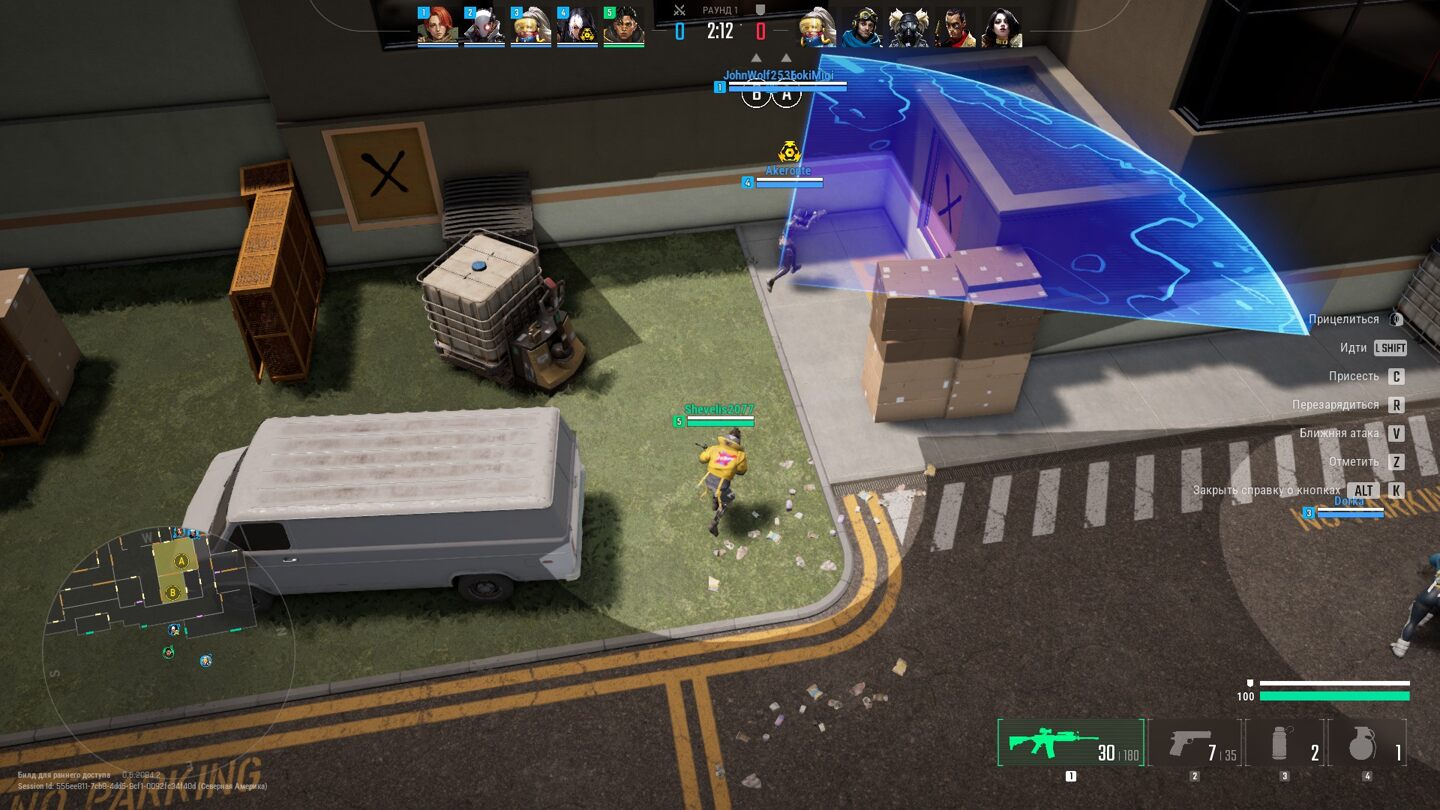
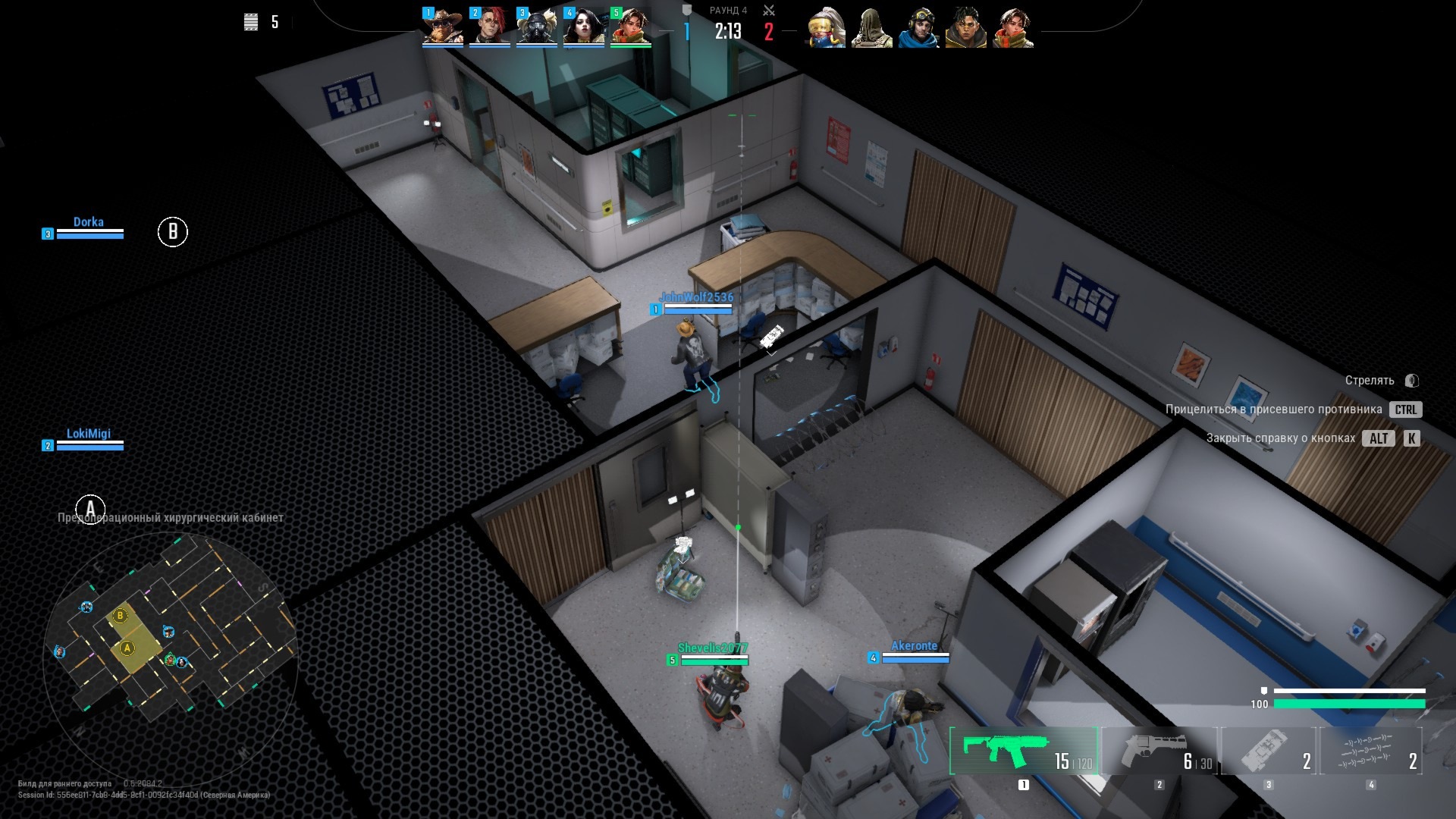
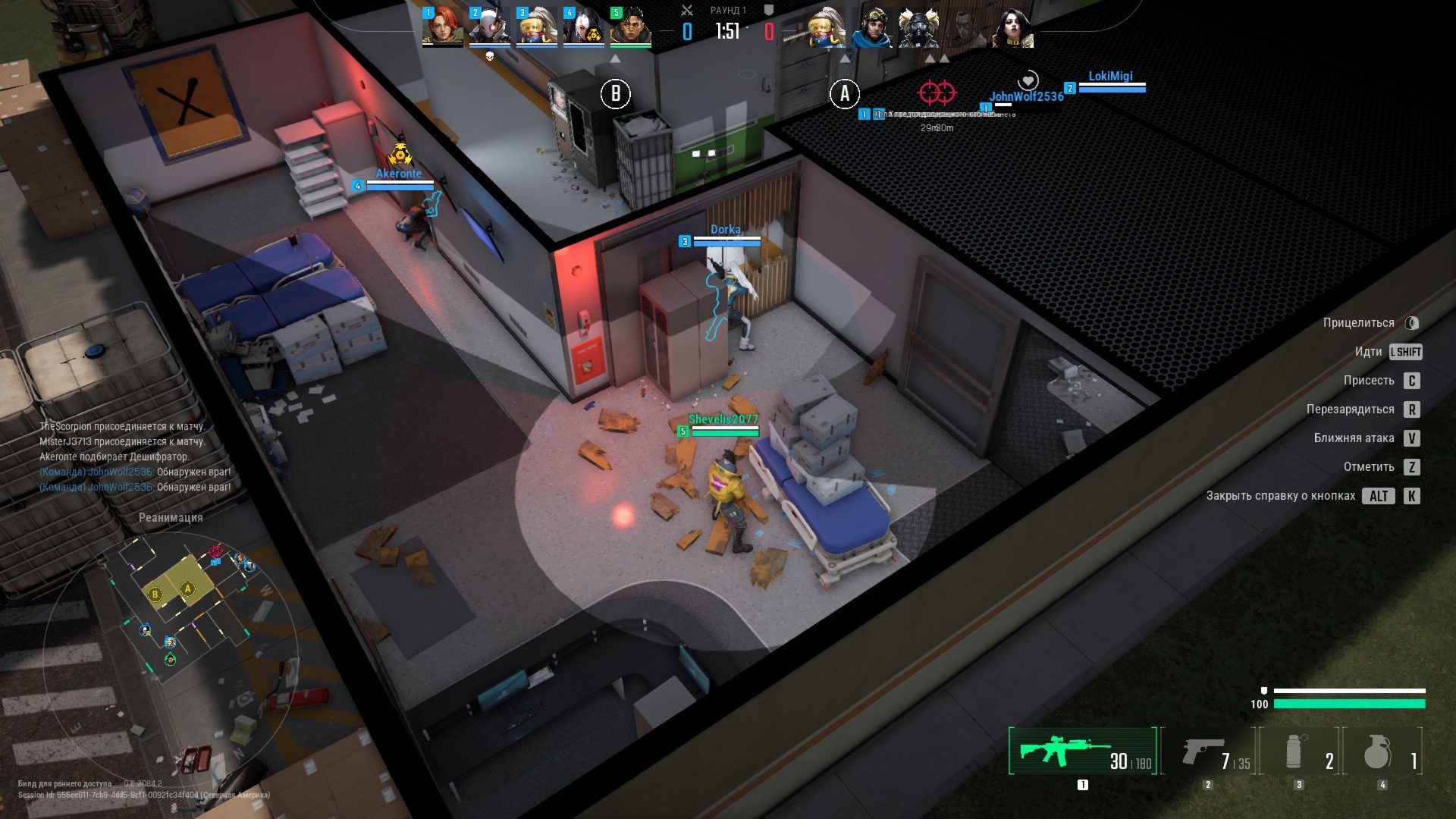
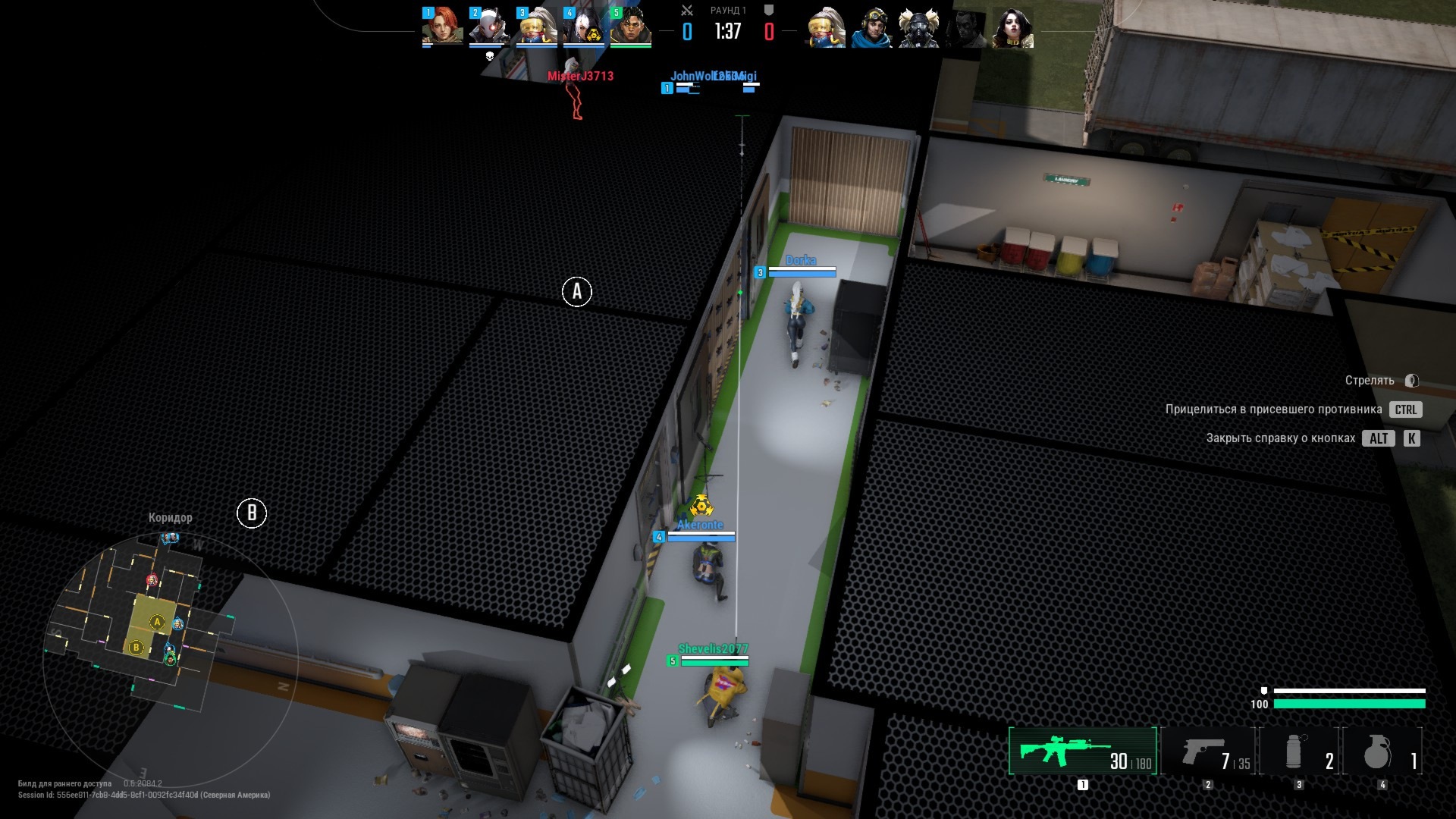
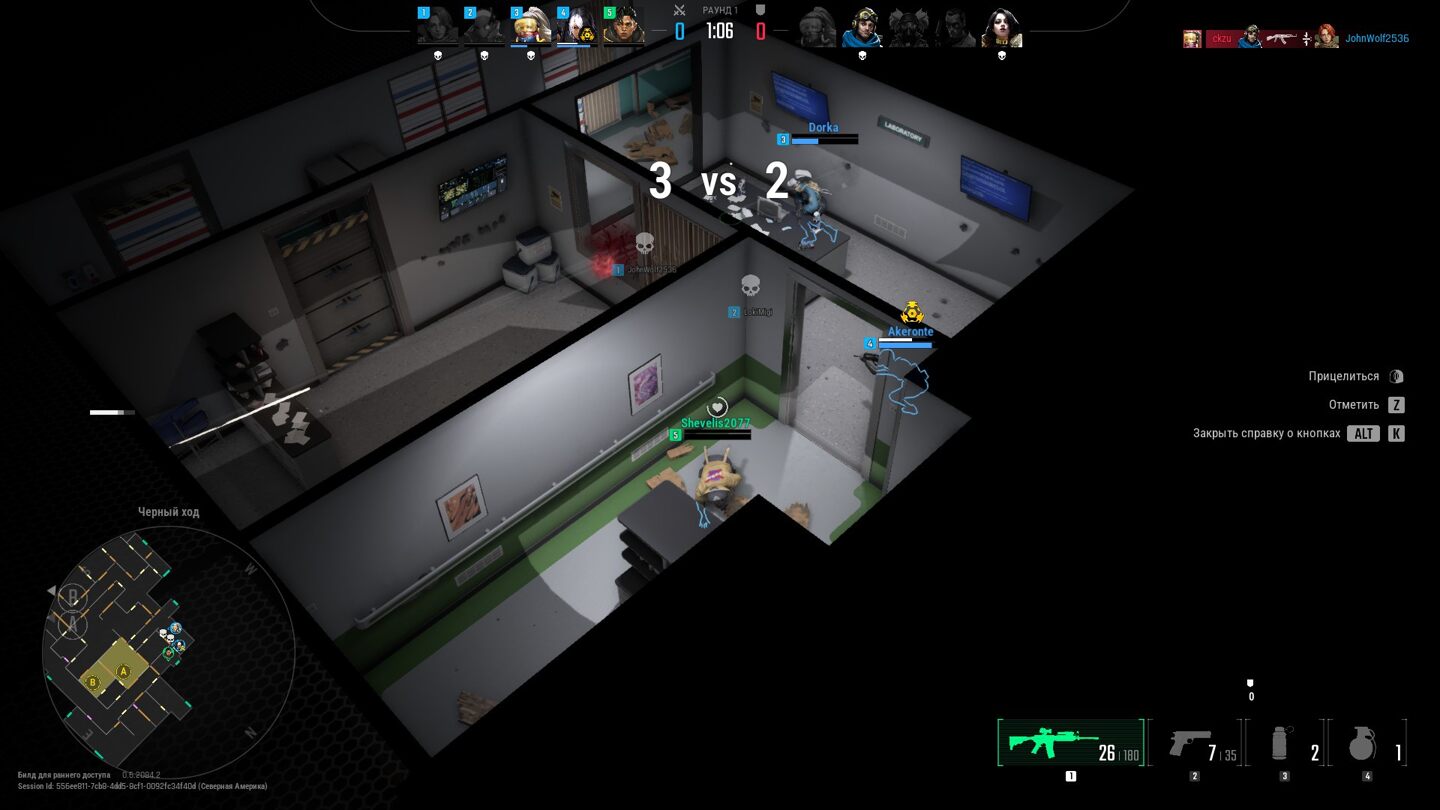
At the beginning of a match, participants choose their characters from a ready-made roster and enter a map full of rooms and corridors. And since the camera hangs above the fighters' heads, most of the surrounding objects are outlined, but an enemy can only be spotted when they are in direct line of sight. This decision creates two important features of the game: it's very easy to navigate the location — it's always clear where you can go and where it's easier to hide, but at the same time, intrigue is preserved at any moment of the battle. The opponent can set up an ambush anywhere, whether behind the nearest door or around a corner. This circumstance forces the team to either move through the building very carefully, tactically "slicing" corners, or take by surprise — spotting suspicious points in advance and bursting in there, firing blindly.
Also, tactics depend on the squad composition: it matters who has which grenades, whether your team got a demolitions expert with explosives or a fortifier with barbed wire. Flashbangs, smokes, and various gadgets come into play. Don't forget that Blindspot is a three-dimensional game. This means you can adjust the height of a grenade throw or a shot (by rotating the mouse wheel while aiming), crouch, and jump. That is, you can maneuver both in the horizontal plane and in the vertical dimension. And this will make anyone a difficult target: imagine the enemy set their crosshair at face level, but you return fire while crouching — it's immediately clear who has more chances.
Also, tactics depend on the squad composition: it matters who has which grenades, whether your team got a demolitions expert with explosives or a fortifier with barbed wire. Flashbangs, smokes, and various gadgets come into play. Don't forget that Blindspot is a three-dimensional game. This means you can adjust the height of a grenade throw or a shot (by rotating the mouse wheel while aiming), crouch, and jump. That is, you can maneuver both in the horizontal plane and in the vertical dimension. And this will make anyone a difficult target: imagine the enemy set their crosshair at face level, but you return fire while crouching — it's immediately clear who has more chances.
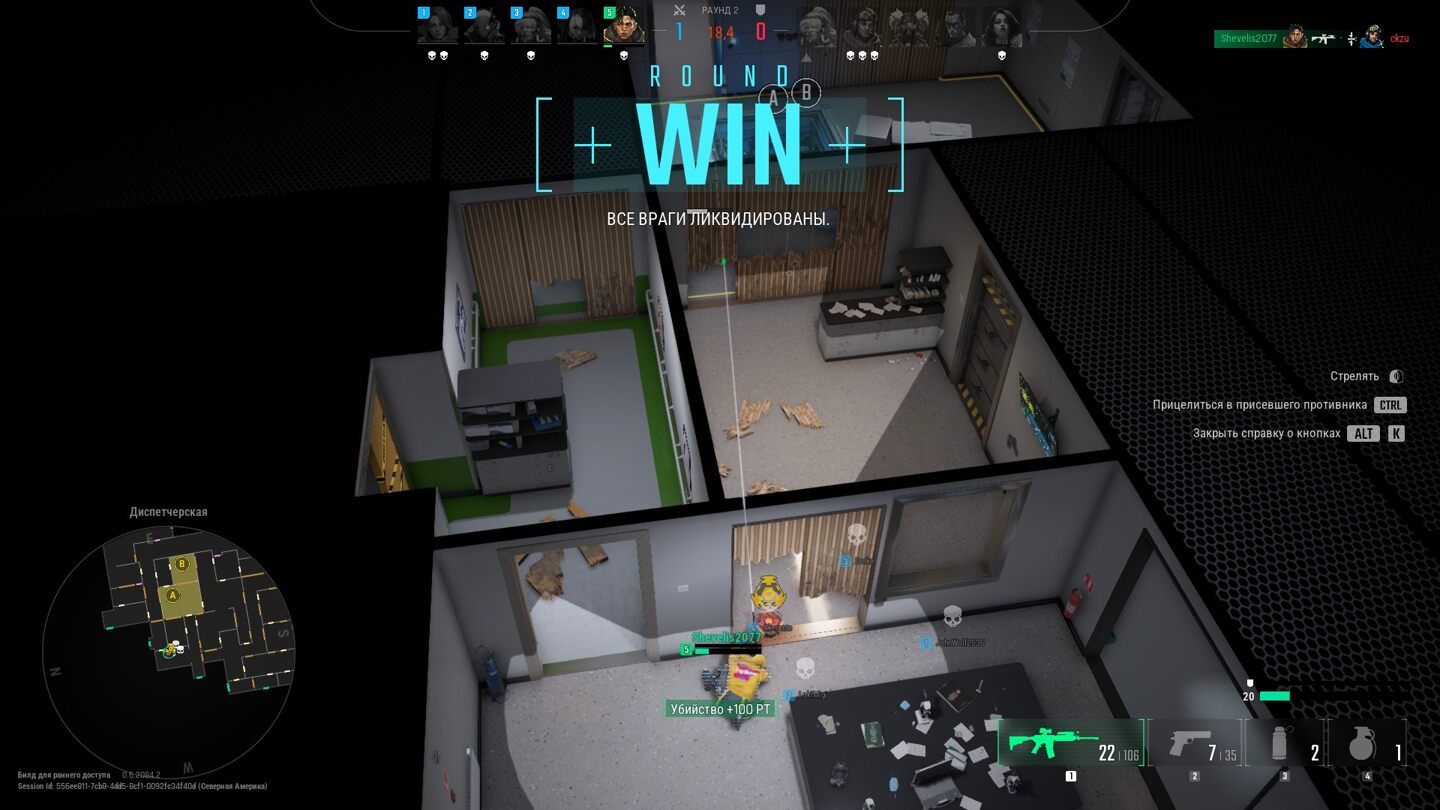
Other interesting differences from first-person shooters are real-time sharing of enemy position data and coordination of flank attacks. In the standard mode, the firefight is conducted by "five versus five" rules, like in Counter-Strike. Of course, there's no need for all five to loiter in one corridor and push head-on — it's much better for part of the squad to split off and perform a flanking maneuver. In the same "CS," you have to study the map thoroughly to do this, but here, thanks to the visual overview of the level, any newcomer will figure out how to flank. At the same time, an enemy spotted by someone on the squad is immediately "revealed" on the team's shared map — no need to place markers or yell in voice chat hoping your teammates will figure out which spot you're talking about.
Nevertheless, voice communication will still come in handy to distribute roles and positions. If your team is playing defensively, it's important to figure out in advance who is boarding up doors where, or setting up other obstacles. The team's scout should direct a drone to the enemy's presumed attack location, and it's also useful for squad members to sort out corners in advance — who will be aiming from behind which one. Since there's no hip-fire here (you can only open fire after aiming), reaction speed in PUBG: Blindspot plays a much smaller role than a well-chosen position. The tricky part of tactics is working with blind spots. Even if opponents aren't visible, they can be deduced by sound or simply by using common sense: if a particular corridor is convenient for advancing, someone will definitely use it. Therefore, providing crossfire in such a place is the key to success in a match.
Nevertheless, voice communication will still come in handy to distribute roles and positions. If your team is playing defensively, it's important to figure out in advance who is boarding up doors where, or setting up other obstacles. The team's scout should direct a drone to the enemy's presumed attack location, and it's also useful for squad members to sort out corners in advance — who will be aiming from behind which one. Since there's no hip-fire here (you can only open fire after aiming), reaction speed in PUBG: Blindspot plays a much smaller role than a well-chosen position. The tricky part of tactics is working with blind spots. Even if opponents aren't visible, they can be deduced by sound or simply by using common sense: if a particular corridor is convenient for advancing, someone will definitely use it. Therefore, providing crossfire in such a place is the key to success in a match.
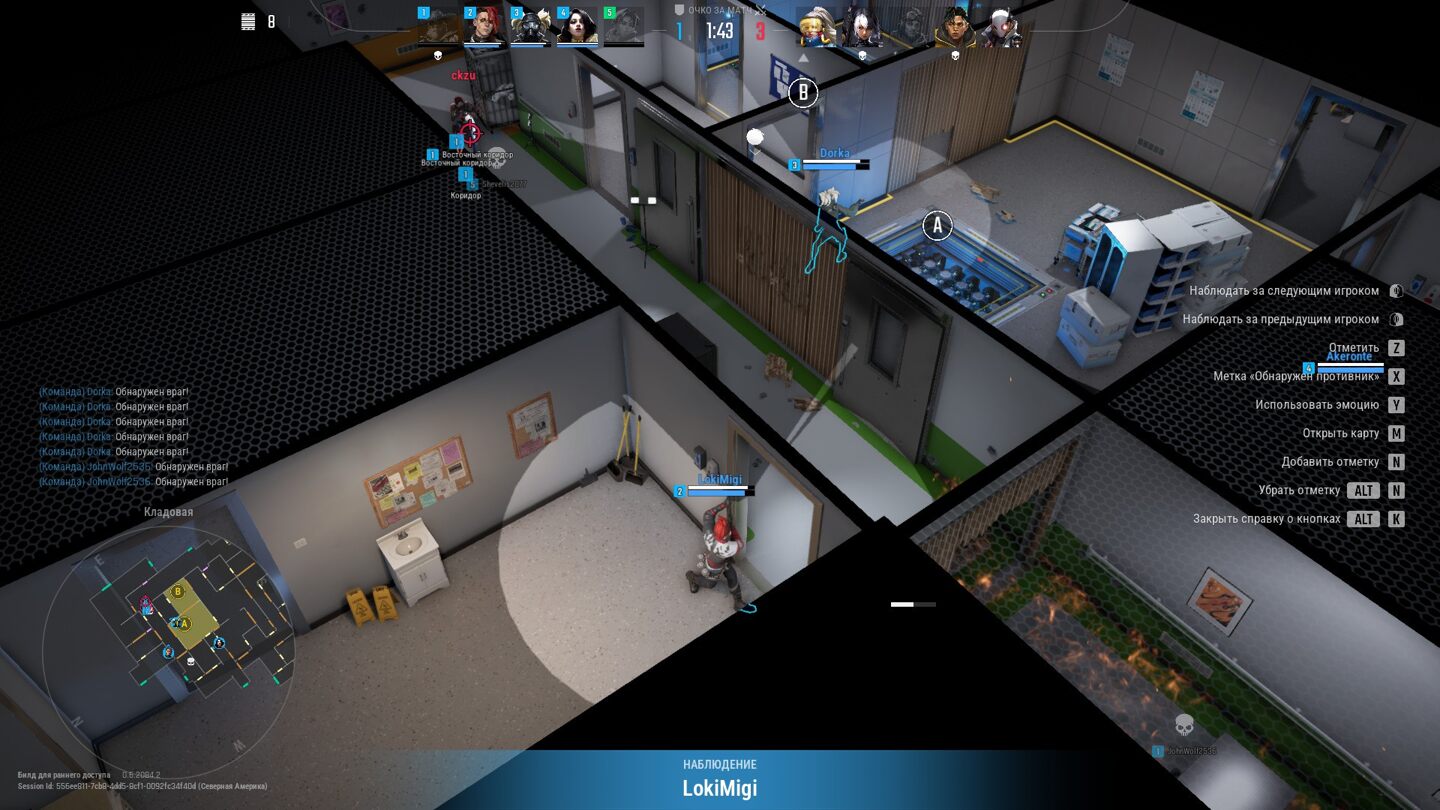
Good headphones can become a real lifesaver in this shooter. Sound localization is implemented qualitatively here: a gamer will be able to determine by ear where the opponent is trampling, what weapon they have, and you can also hear reloading and the pulling of a grenade pin. All this gives hints: a magazine change is a window for attack, preparing a grenade is a reason to change position, and running in a corridor will indicate where opponents are moving from and to, so there will be a moment to choose cover in their blind spot. Often, one player with good hearing decides the outcome of an entire match with their actions, whereas usually in the online shooter genre, the advantage goes to those with fast reaction, excellent accuracy, and a good monitor. These accents, combined with old-fashioned design, make Blindspot an unusual project.
Characters, Modes, and Maps
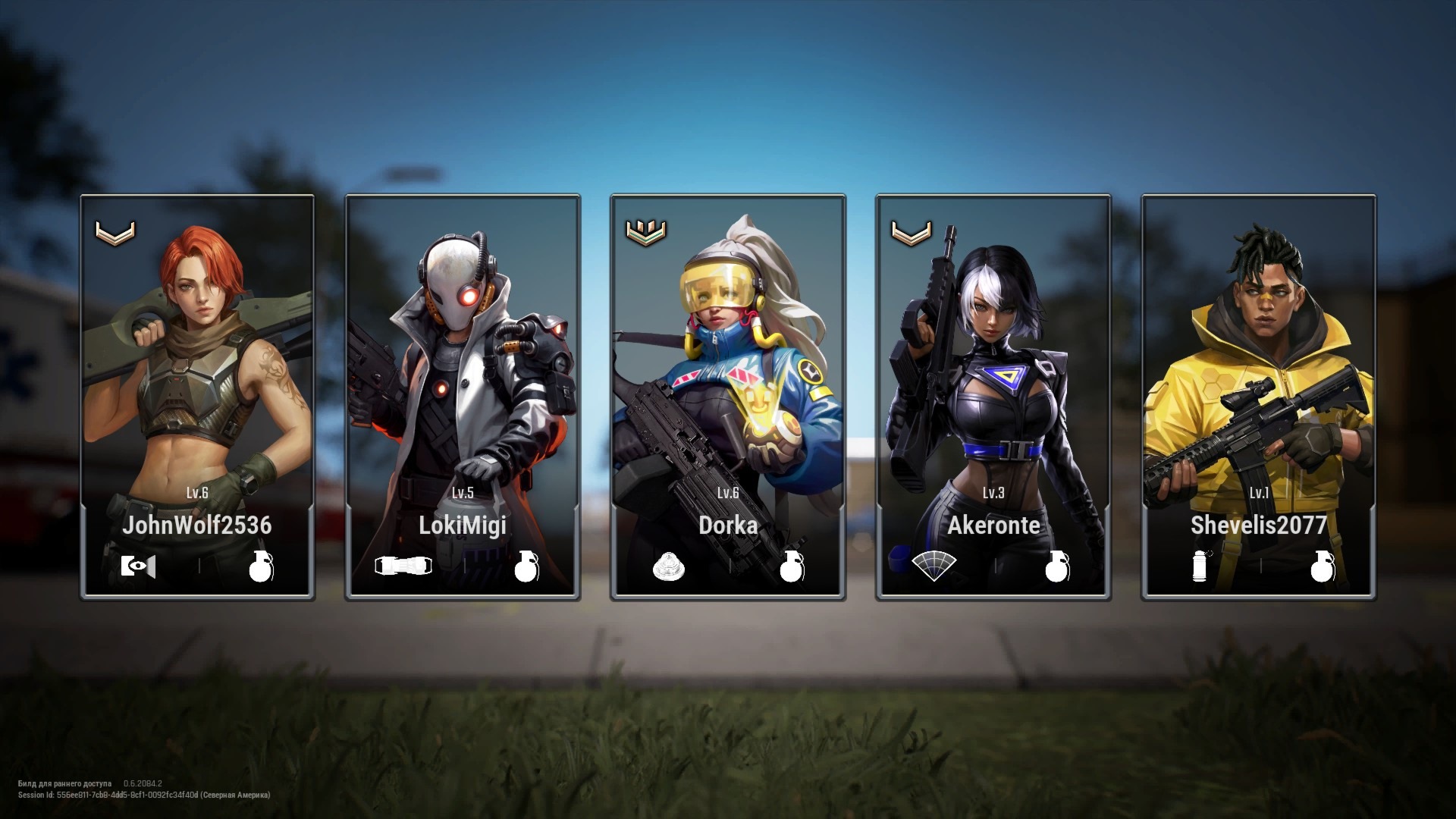
Since its release, the game has been compared to Rainbow Six. This is due to two aspects, the first of which is the choice of heroes. Unlike Counter-Strike, the fighters here are different, they benefit the team in different ways, and use unique tactical gadgets. Class-wise, characters are divided into four types: assaulters, tacticians, scouts, and breachers. The first are effective at breakthroughs — they either prevent the enemy from assessing the situation by throwing smokes, or cover themselves and comrades with shields. The second can change the situation on the battlefield — for example, with mines, medkits, and stimulants. The third, as is easy to guess, conduct reconnaissance, whether it's gathering information from drones or tricks with radars. Finally, breachers are obstacle eliminators: wielding mines or hammers, they break through walls and thereby open new paths for their teammates.
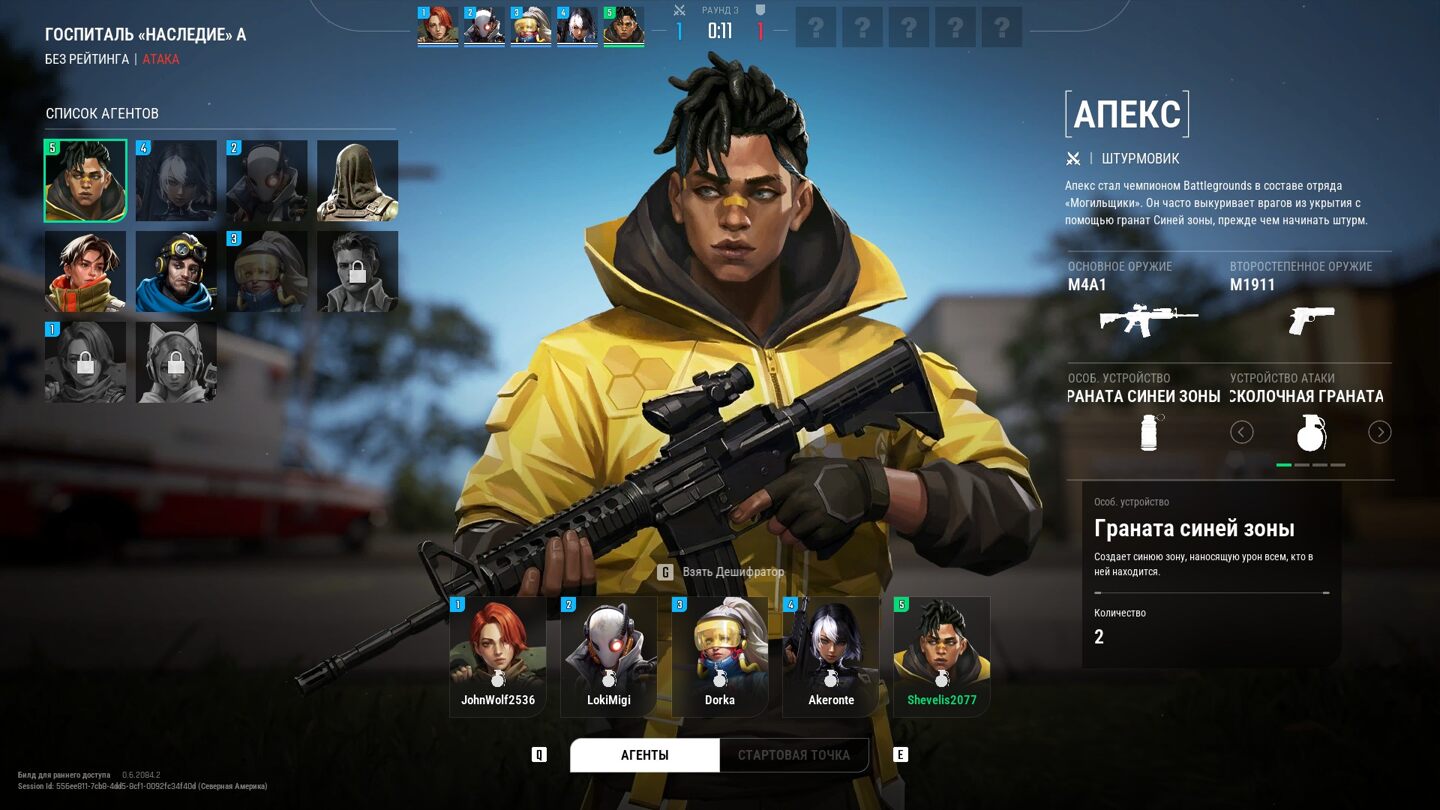
An ordinary hero in all characteristics is the assaulter Apex: his arsenal includes an assault rifle, a pistol, and two types of grenades, including special ones whose explosion causes opponents the same effect as getting caught in the blue zone of the PUBG: Battlegrounds battle royale. Keeping Apex company in the class are Dropout (who poisons the enemy with a gas charge), Haze, capable of temporarily increasing the speed of the entire team, and Wilson — the owner of a ballistic shield. However, the character can't shoot from behind this piece of armor — he's either protected or armed.
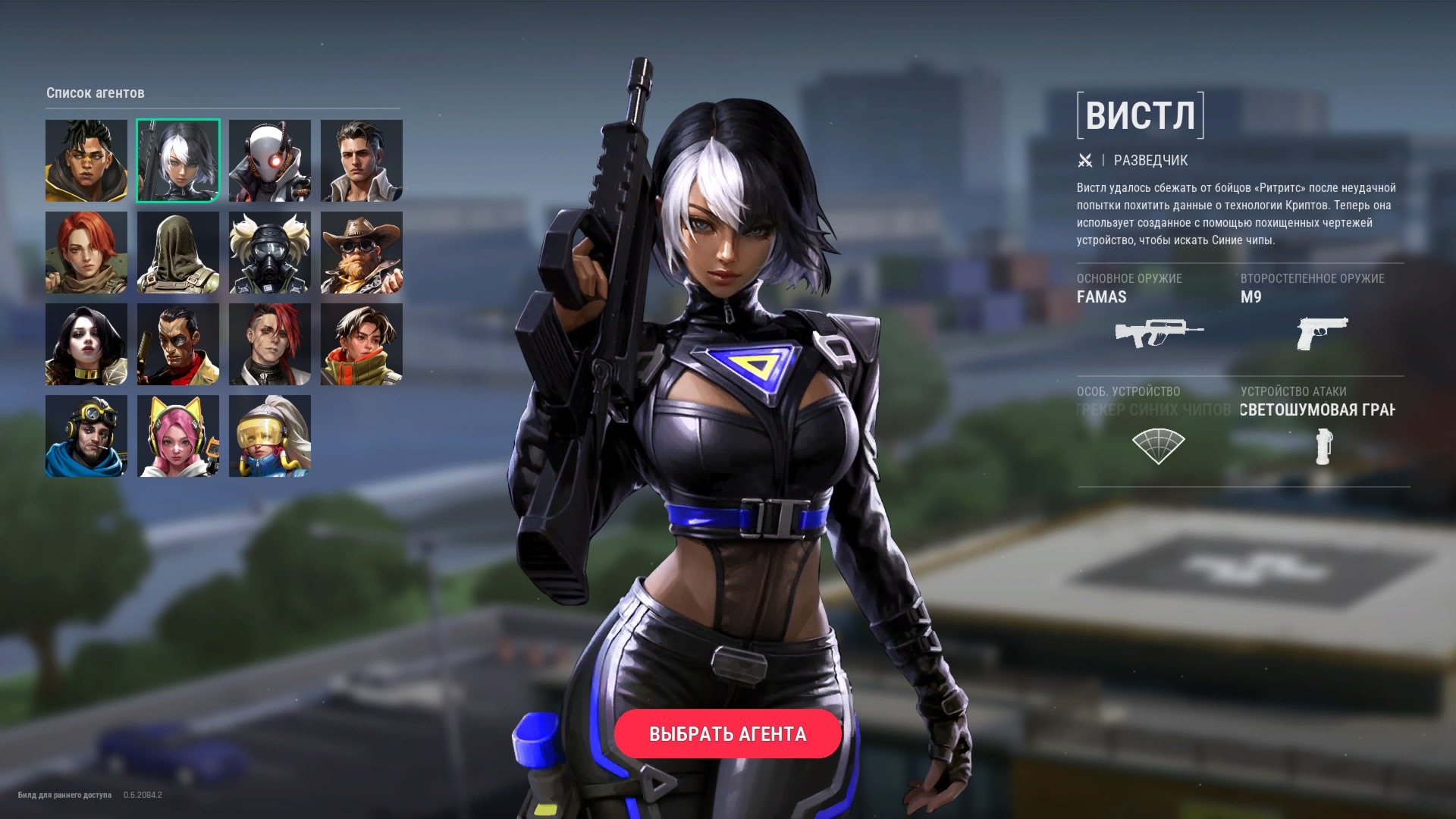
The scout list is best opened with Whistle — the girl not only uses the rapid-fire Famas rifle but also a radar that highlights agents behind walls. Buddy shoots from a powerful sniper rifle and also carries three drill cameras — they penetrate through walls and show what's in adjacent rooms. Rounding out the trio of available scouts is Claris: in her hands are a machine gun, a sawed-off shotgun, and motion sensors.
The breacher Zen shoots from a marksman rifle and a sticky launcher that attaches a powerful charge to any wall. The agent has only one grenade in his arsenal, but it will allow overcoming an obstacle at the most crucial moment. Another breacher is Kyak, who carries three remote charges at once: it's enough to place them in the right spot and wait for the enemies to approach, then press the button and stop the enemy's attack. Crusher wields a hammer — with it, you can smash six any obstructing objects to pieces.
The scout list is best opened with Whistle — the girl not only uses the rapid-fire Famas rifle but also a radar that highlights agents behind walls. Buddy shoots from a powerful sniper rifle and also carries three drill cameras — they penetrate through walls and show what's in adjacent rooms. Rounding out the trio of available scouts is Claris: in her hands are a machine gun, a sawed-off shotgun, and motion sensors.
The breacher Zen shoots from a marksman rifle and a sticky launcher that attaches a powerful charge to any wall. The agent has only one grenade in his arsenal, but it will allow overcoming an obstacle at the most crucial moment. Another breacher is Kyak, who carries three remote charges at once: it's enough to place them in the right spot and wait for the enemies to approach, then press the button and stop the enemy's attack. Crusher wields a hammer — with it, you can smash six any obstructing objects to pieces.
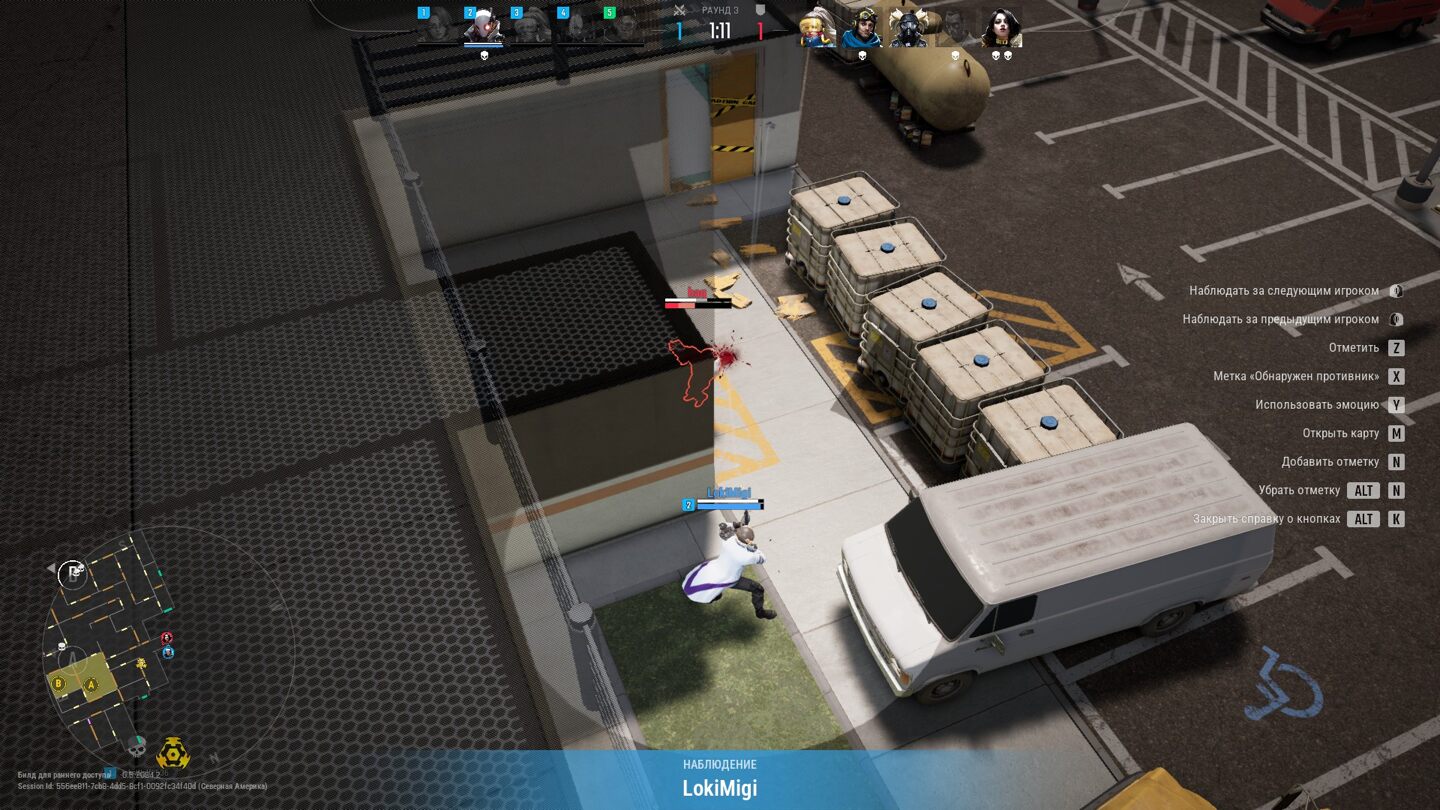
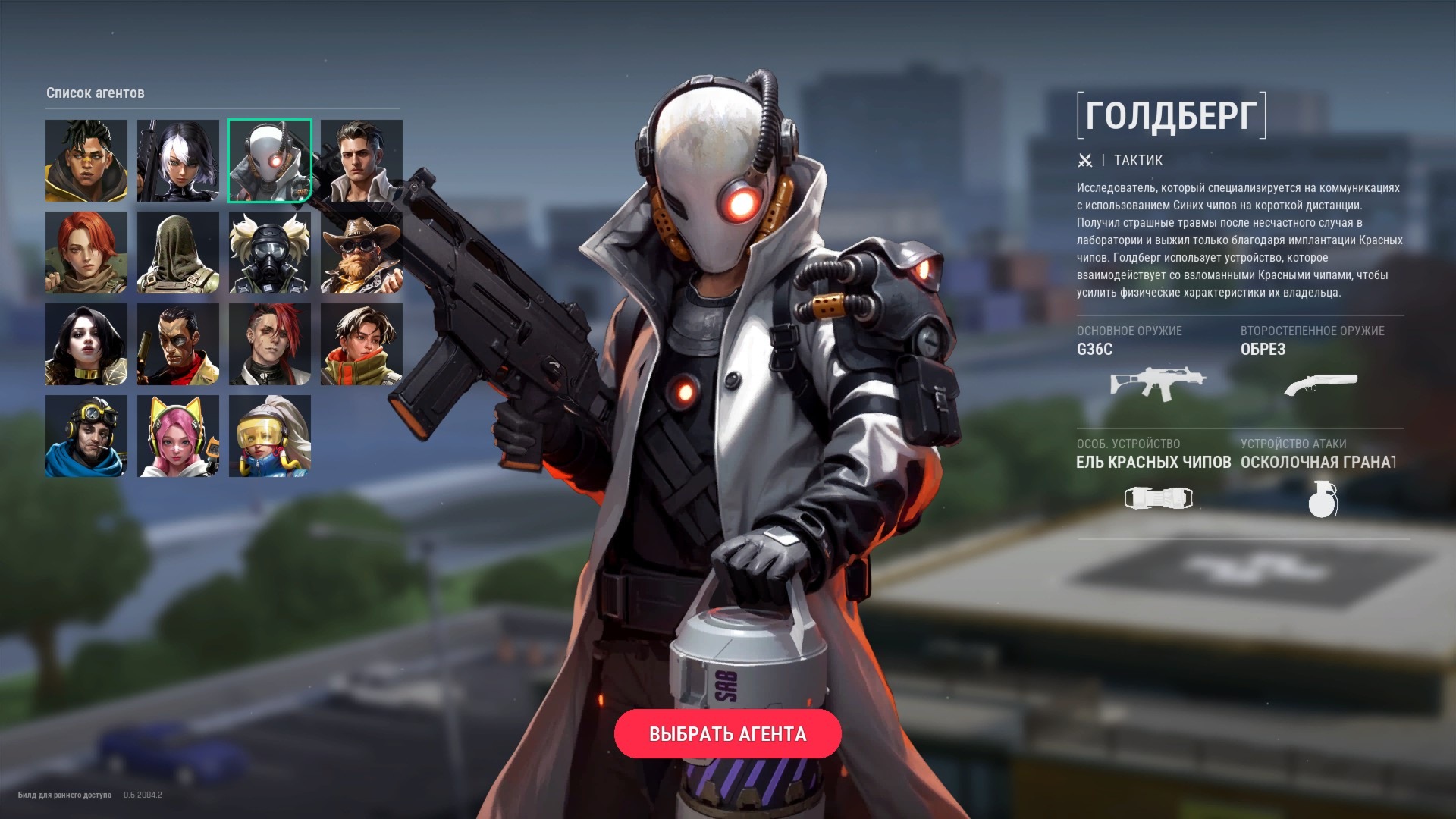
Rounding out the hero roster are the tacticians. Goldberg is unremarkable in terms of weaponry, but can buff squadmates. Collision shoots from a shotgun and places non-contact mines in corridors — as soon as an opponent enters the laser's range, the detonator triggers immediately. The character has three such devices at once. The combat lady with the callsign Fanatic can heal teammates from serious injuries twice, and Blaze blocks the line of enemy attack with Molotov cocktail throws. Agent Patch, in turn, can construct cover anywhere — just throw a grenade with hard foam filler there. Not all listed operatives are available immediately — you need virtual currency to obtain Wilson, Buddy, Zen, Haze, Blaze, and Patch. But even the available selection is enough to create a balanced team.
And with locked characters, you can familiarize yourself even before purchasing them at the "Firing Range": everyone is open here, nothing prevents you from testing anyone in shooting range conditions. Another mode useful for newcomers is "Training." Everyone who installed the game on their computer goes through it, but if you ever forget the controls, it makes sense to study the tutorial again. There's also "Custom Game" — in it, you can create your own match and post an open invitation or call friends from your Steam list. But all these points are auxiliary, and there are currently three main modes in PUBG: Blindspot.
And with locked characters, you can familiarize yourself even before purchasing them at the "Firing Range": everyone is open here, nothing prevents you from testing anyone in shooting range conditions. Another mode useful for newcomers is "Training." Everyone who installed the game on their computer goes through it, but if you ever forget the controls, it makes sense to study the tutorial again. There's also "Custom Game" — in it, you can create your own match and post an open invitation or call friends from your Steam list. But all these points are auxiliary, and there are currently three main modes in PUBG: Blindspot.
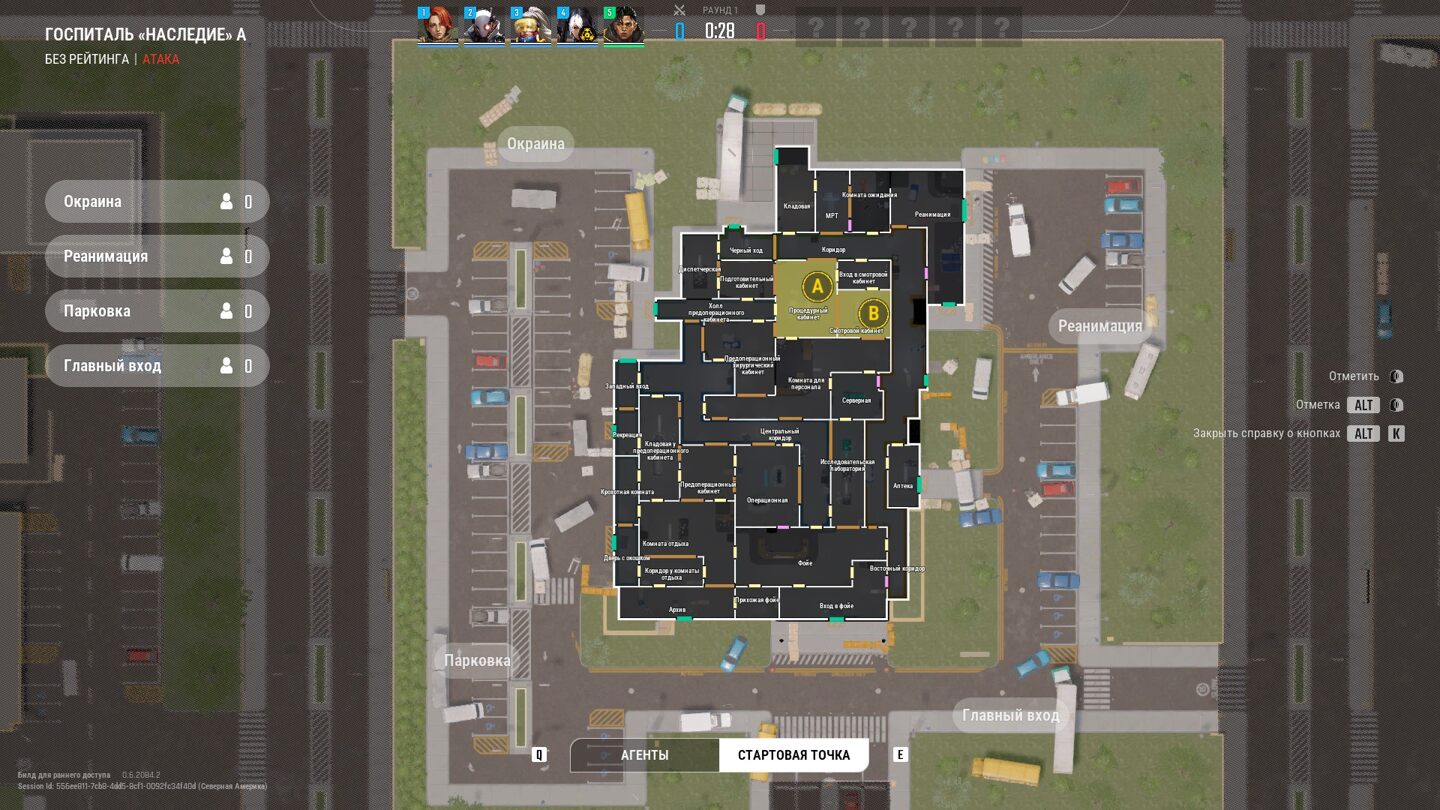
"Unranked" is a standard "5v5" format match. Users are divided into two teams: one plays defense, and the other attacks. At the very beginning, defenders need to fortify their positions by boarding up doors, placing mines and obstacles, while attackers need to conduct reconnaissance. During the firefight, the latter must install a decoder at the level, while the former are obliged to prevent this. Every three rounds, the sides switch places, and the squad that first achieves four victories prevails. The second mode is "Competitive," available from account level 10. It has the same conditions, but with the awarding of ranking points. Rounding out the trio of modes is "Team Deathmatch": this is a classic of the shooter genre, where the score is based on the number of eliminated opponents.
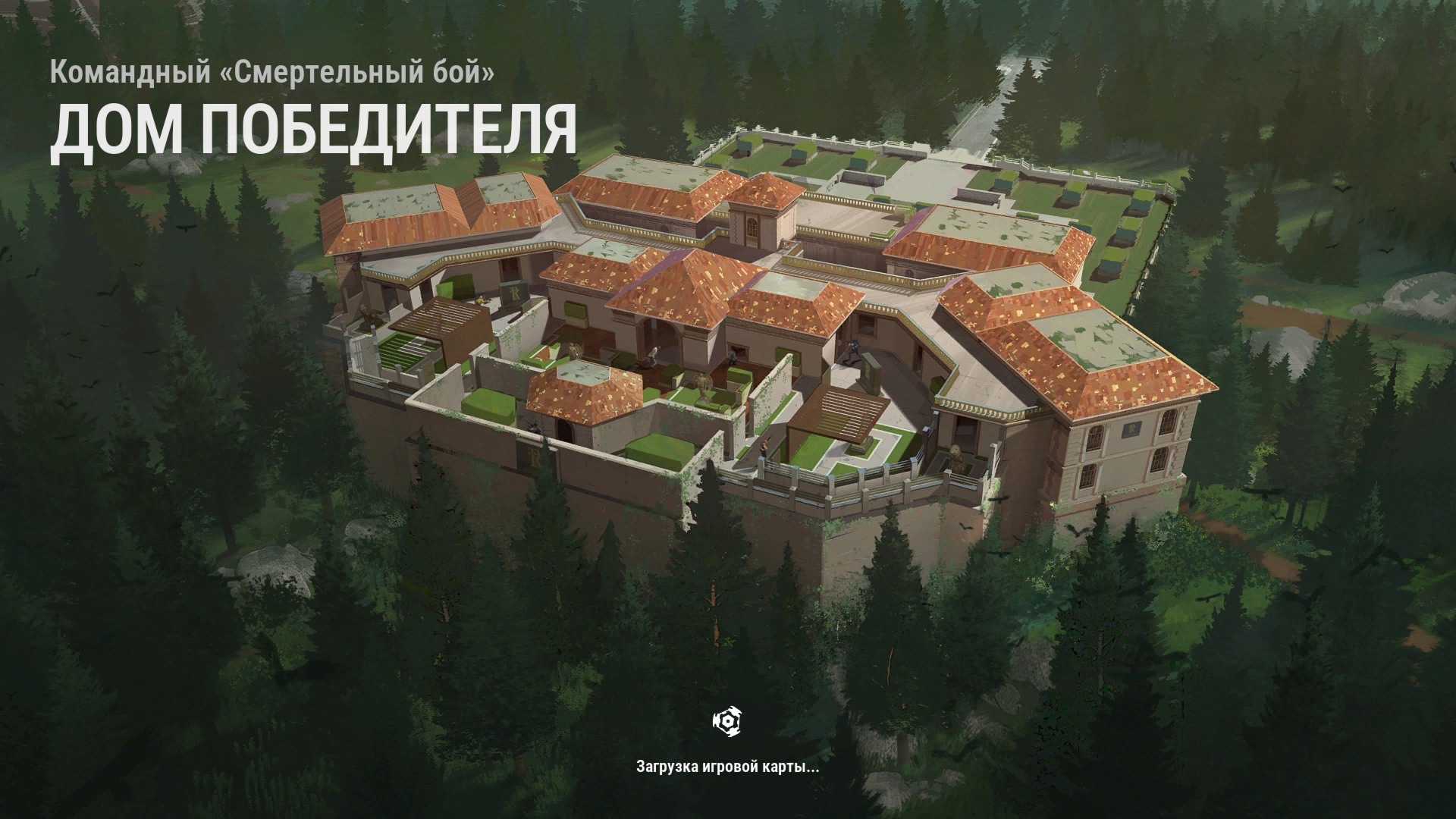
Formally, all modes have a timer so that people don't camp too much in corners, but in reality, matches in the game are short-lived. This is achieved thanks to the concise and clear architecture of the locations. PUBG: Blindspot maps are largely similar to each other. Their sizes are modest, and the action always takes place in some building, be it a hospital, an office, or a luxurious mansion. The main thing is that inside there are rooms, corridors, stairs, windows, and other details that affect tactics.
Formally, all modes have a timer so that people don't camp too much in corners, but in reality, matches in the game are short-lived. This is achieved thanks to the concise and clear architecture of the locations. PUBG: Blindspot maps are largely similar to each other. Their sizes are modest, and the action always takes place in some building, be it a hospital, an office, or a luxurious mansion. The main thing is that inside there are rooms, corridors, stairs, windows, and other details that affect tactics.
How does progression work?
Every user in the game has a level that roughly shows how many matches this person has won and how many opponents they've eliminated. That is, you can get experience points in only one way — by being active. And this, in turn, depends on how well you've mastered the characters. Since they are all unique, each with their own combat style and equipment, there's no point in taking on everyone at once. You need to start gradually, progressing from the simplest to the complex — and then victories will become more frequent, and the level will grow faster. Progression unlocks access to new modes and activities, and also brings virtual currency. You're given 3000 coins at the start, but that's barely enough to unlock one hero. After that, you're on your own.
It would be logical to assume that since the action game is free, some features or cosmetics in it should be available for real money. Nevertheless, there's neither intrusive advertising of the store and sales, nor any obvious ways to exchange cash for in-game advantages. Developers offer everything for free — at least while their project is in early access.
It's worth noting that a significant number of negative reviews from Russian players are related to the unavailability of a European server: you launch a match, but after a lengthy loading screen, you're thrown back to the menu. So you have to choose whether to compete on Asian and American servers, where the ping is higher, or look for a solution to the problem (and there are plenty of solutions, to be fair — a group dedicated to this topic was even created in Steam). Be that as it may, this is the only significant problem with the shooter. And if it doesn't bother you, you're unlikely to encounter other difficulties.
It's worth noting that a significant number of negative reviews from Russian players are related to the unavailability of a European server: you launch a match, but after a lengthy loading screen, you're thrown back to the menu. So you have to choose whether to compete on Asian and American servers, where the ping is higher, or look for a solution to the problem (and there are plenty of solutions, to be fair — a group dedicated to this topic was even created in Steam). Be that as it may, this is the only significant problem with the shooter. And if it doesn't bother you, you're unlikely to encounter other difficulties.
Conclusion
PUBG: Blindspot is an unusual competitive shooter that puts gamers' accuracy and reaction speed second to their tactical savvy. The ability to plan an attack and defense is more important here than the ability to consciously press more than two character control buttons on the keyboard. The original top-down perspective gives the game a charm of old-fashionedness, and the choice of heroes, destructible environment, and placement of obstacles relate it to the popular Rainbow Six Siege. Moreover, the new game is available for free — to participate in matches, you just need a Steam account. So there are plenty of reasons to play the new game, but only if you're not averse to genre experiments.
Zarium. August 2026.
Zarium. August 2026.