





Legend of YMIR Review
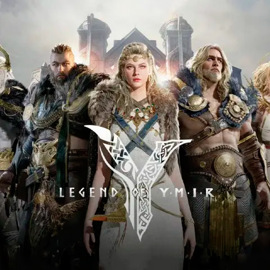
Back in 2022, when the whole world was impressed by the God of War series reboot, Korean company Wemade announced an MMORPG based on Norse mythology. The idea intrigued the public, as Kratos is a solo adventure hero, and many gamers would like to transfer battles with draugr, Æsir, and giants into a multiplayer format. However, from the very beginning, no one doubted that the Wemade team would stick to their repertoire — offering something technological but conservative, and with gacha mechanics. Finally, in the fall of 2025, Legend of YMIR reached global release — it's time to find out what place this project occupies in the developers' work and who will like it.
Getting to Know the Game
To register an account, simply link the official launcher with a Google email — no age verification or phone number required. You won't have to pay any money either, as Legend of YMIR is free-to-play for everyone. And the first thing to do after installing it on your computer or mobile device is to choose a server and character class. Russian gamers will be pleased to know that the game has both Russian localization (interface and text translation) and support for local servers, so there's no need to connect to a session far away and suffer from high ping. However, it's necessary to have at least some knowledge of Norse myths and Viking culture, even if just from games and comics.
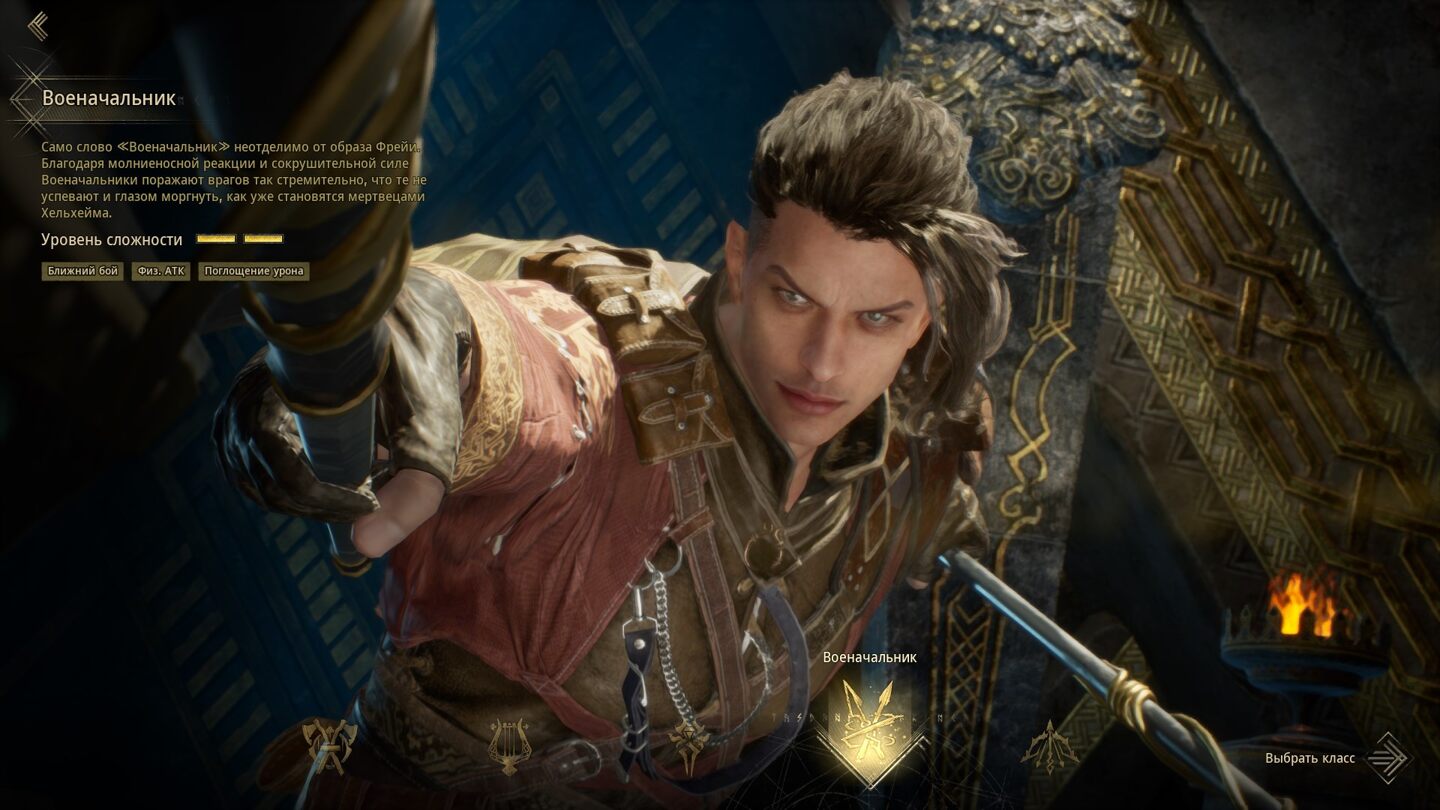
A person unfamiliar with all this will have questions already at the class selection stage. First on the list is the Berserker — usually in the RPG genre, such characters are classified as warriors. He skillfully wields an axe and shield, is dangerous in close combat, and does without magic. The Skald, however, is not averse to using magic — in a group, they are responsible for resurrecting fallen allies and magical attacks from a distance. Third in order and the easiest to master, recommended for beginners, is the Völva. She goes all out with magic, burning enemies with lightning and tongues of flame, and can hit both single targets and crowds at once.
The Warlord is a class responsible for quickly dealing large amounts of damage. In other words, a damage dealer. His favorite weapon is the spear. Closing the top five available heroes is the Archer. Her abilities can be judged by her specialization: she shoots arrows at monsters and acts at a distance from the target.
Having thus chosen a hero or heroine, you can additionally customize their appearance in the editor. There are no flexible settings here. You'll be offered eight regular appearance types and four more advanced ones — in the form of a valkyrie. However, you can't change facial features, height, build, or hairstyle. But you can link up to four characters to your account to switch between them at will. What will interest a person launching the game for the first time is something else: why do the hero descriptions contain words like «valkyrie,» «Freyja,» and «Helheim,» but there's no explanation of what all this means? Moreover, the developers avoid clarifications throughout the story, which is why newcomers unfamiliar with the topic risk not understanding what's going on and why the characters' motives are important. Let's try to do this work for Wemade's employees.
The Warlord is a class responsible for quickly dealing large amounts of damage. In other words, a damage dealer. His favorite weapon is the spear. Closing the top five available heroes is the Archer. Her abilities can be judged by her specialization: she shoots arrows at monsters and acts at a distance from the target.
Having thus chosen a hero or heroine, you can additionally customize their appearance in the editor. There are no flexible settings here. You'll be offered eight regular appearance types and four more advanced ones — in the form of a valkyrie. However, you can't change facial features, height, build, or hairstyle. But you can link up to four characters to your account to switch between them at will. What will interest a person launching the game for the first time is something else: why do the hero descriptions contain words like «valkyrie,» «Freyja,» and «Helheim,» but there's no explanation of what all this means? Moreover, the developers avoid clarifications throughout the story, which is why newcomers unfamiliar with the topic risk not understanding what's going on and why the characters' motives are important. Let's try to do this work for Wemade's employees.
In Legend of YMIR, you play as an einherjar — a warrior who fell in battle and was transported by valkyries to Valhalla, where the hero must feast and fight with other brawlers until the end of the world. In other words, we find ourselves in an afterlife reality — a large open world created based on myths. Its name, Ymir, is the name of the giant from whose body the gods (Æsir) created the universe at the beginning of time. But what has a beginning must also have an end. For all living things, including the gods themselves, will perish in the final battle — known as Ragnarök. The forces of chaos and evil will be commanded by the fire giant Surtr (who, by the way, is one of the game's bosses), while Odin, Thor, and other Æsir with their einherjar army will defend Asgard (the land of the gods). And right in the MMORPG's introduction, we're made to understand that the fateful day is closer than ever.
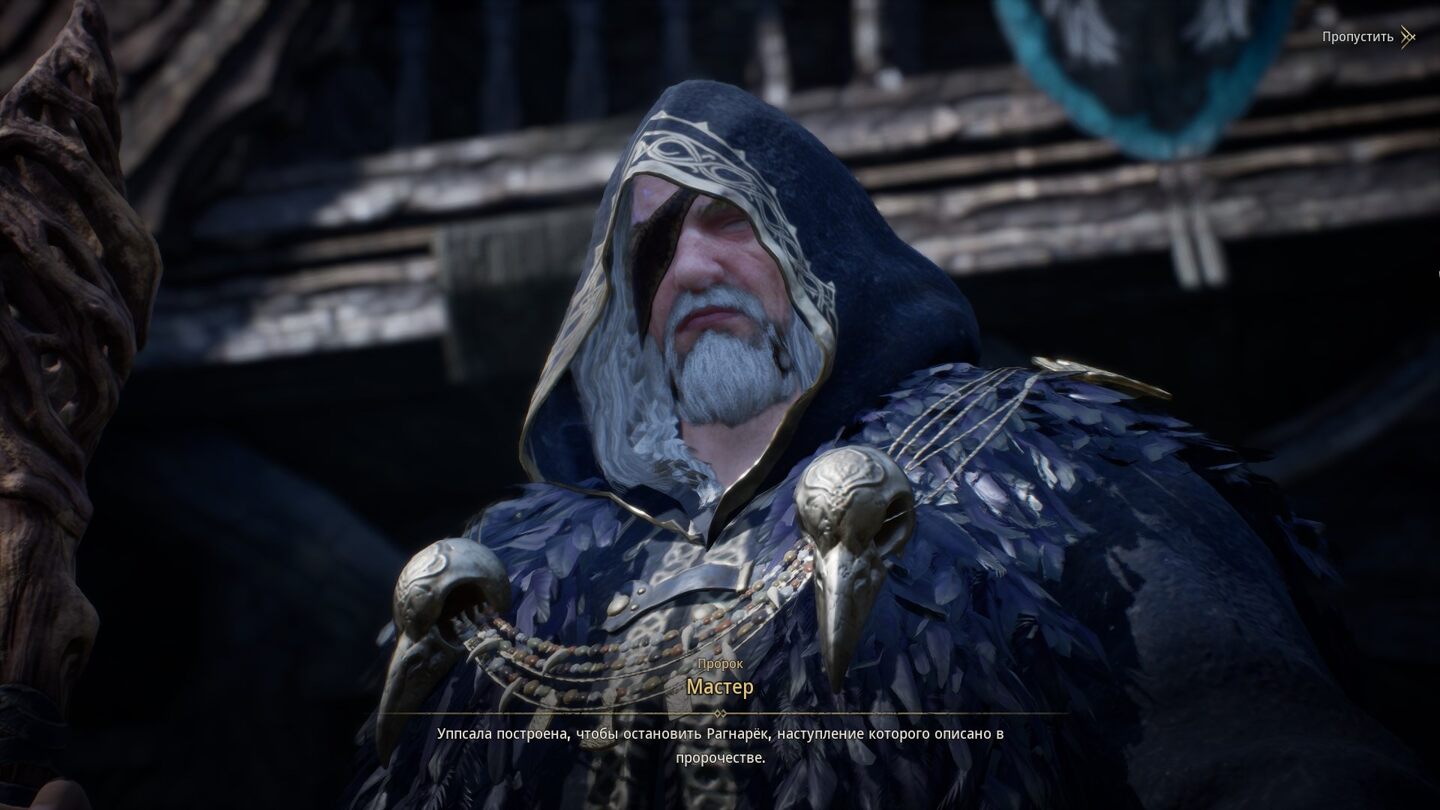
The jötnar giants attack Uppsala, where the opening chapters of the story take place, and they are supported by ghouls from Helheim — the Norse version of hell. You are asked to defend the settlement from monsters. Leading the defense is the eldest of the gods, Odin — in the game, he's called the Master, but the old man is easily recognizable by his eye patch and raven skulls on his shoulders, as Odin agreed to exchange his eye for a drink from the well of wisdom, and he was always accompanied by the ravens Huginn and Muninn. The course of the battle is changed by the appearance of Thor — the god of thunder, who appears here no less impressively than in the Marvel cinematic universe. He flies in a halo of lightning and crushes enemies with his hammer, only unlike Chris Hemsworth from the Avengers movies, he's wearing a magnificent costume in the colors of the Swedish flag.
The jötnar giants attack Uppsala, where the opening chapters of the story take place, and they are supported by ghouls from Helheim — the Norse version of hell. You are asked to defend the settlement from monsters. Leading the defense is the eldest of the gods, Odin — in the game, he's called the Master, but the old man is easily recognizable by his eye patch and raven skulls on his shoulders, as Odin agreed to exchange his eye for a drink from the well of wisdom, and he was always accompanied by the ravens Huginn and Muninn. The course of the battle is changed by the appearance of Thor — the god of thunder, who appears here no less impressively than in the Marvel cinematic universe. He flies in a halo of lightning and crushes enemies with his hammer, only unlike Chris Hemsworth from the Avengers movies, he's wearing a magnificent costume in the colors of the Swedish flag.
But one flying strongman with a hammer isn't enough to defend Uppsala. To stop the hordes, you need to move Bifröst. In myths, this is the name of the rainbow bridge connecting Asgard with the dark forest Mirkwood, from where the fire giant Surtr and his army will come during Ragnarök. The game, unfortunately, doesn't explain all this context — you're simply told that to repel the enemy attack, you need to move Bifröst. And such lack of explanation, as you understand, prevents deep immersion in the game's events. And further mentions of characters or places from mythology come without clarification. However, the story in Legend of YMIR, as in most Korean MMORPGs, takes a back seat, and the main goal of the einherjar is clear anyway. You must delay Ragnarök by any means necessary, performing many feats and destroying legions of enemies.
It's also worth noting the game's overall presentation. Although it's multiplatform and available on both PC and mobile devices, the graphics are quite modern — thanks to the Unreal Engine 5. And the heroes' adventures are accompanied not only by bright effects but also by symphonic music with a folkloric twist and choral singing — sometimes reminiscent of the God of War soundtrack, sometimes the melodies from The Witcher 3. Compared to Wemade's previous projects, including MIR4, this is clearly a step forward.
It's also worth noting the game's overall presentation. Although it's multiplatform and available on both PC and mobile devices, the graphics are quite modern — thanks to the Unreal Engine 5. And the heroes' adventures are accompanied not only by bright effects but also by symphonic music with a folkloric twist and choral singing — sometimes reminiscent of the God of War soundtrack, sometimes the melodies from The Witcher 3. Compared to Wemade's previous projects, including MIR4, this is clearly a step forward.
World, Battles, and Progression
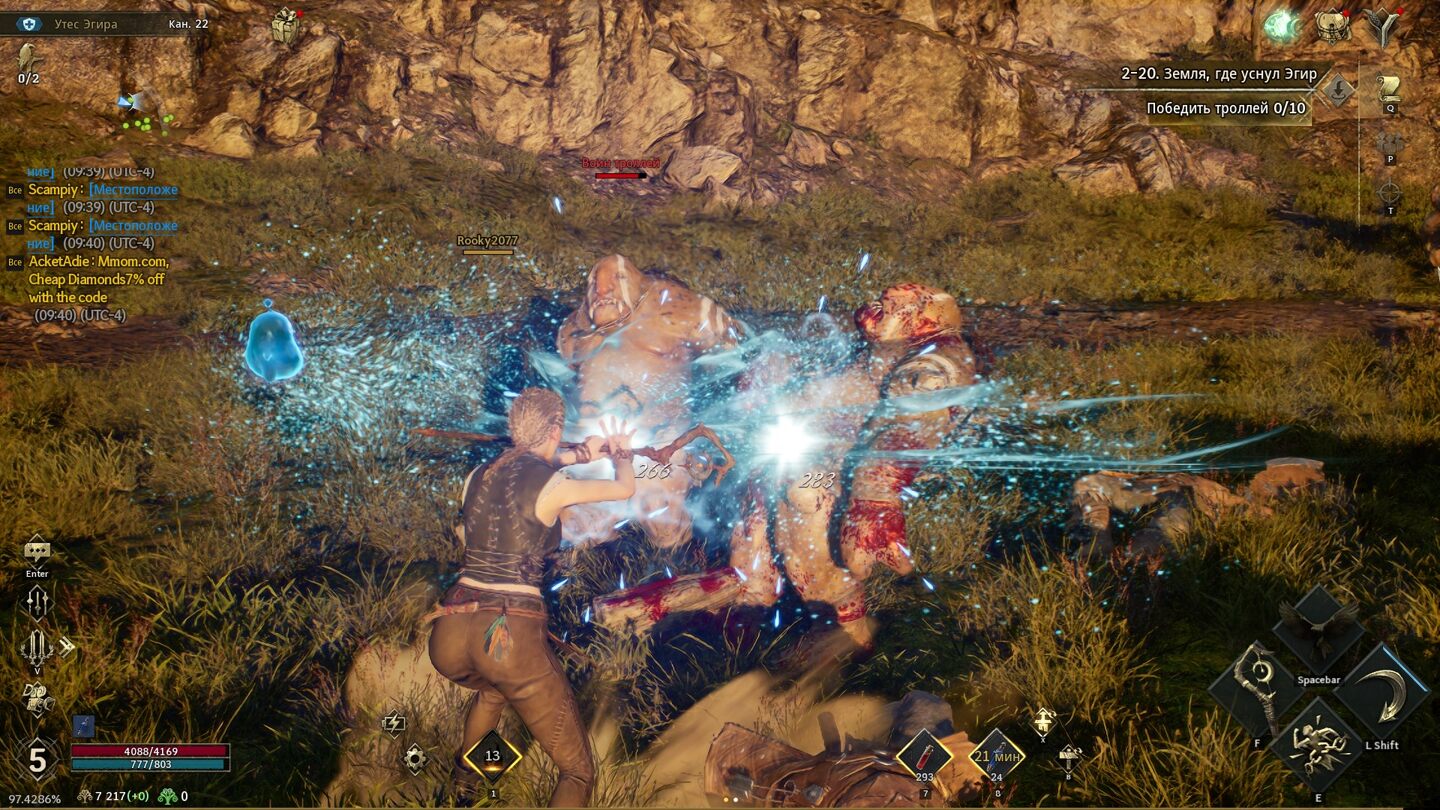
Gameplay consists of three-quarters map navigation and battles with enemies, whether they're puny kobolds, massive jötnar and trolls, or heroes controlled by other users. To prevent these repetitive actions from becoming tiresome, the developers have added many simplifications to the game — following the example of other Asian MMOs. That is, there's no need to control every movement of the character. For example, Legend of YMIR has a large world divided into locations — you can run anywhere and fight everyone you meet. But just click on the destination or quest objective in the upper right corner, and the einherjar under your control will go in the right direction on their own, while you look around and enjoy the views.
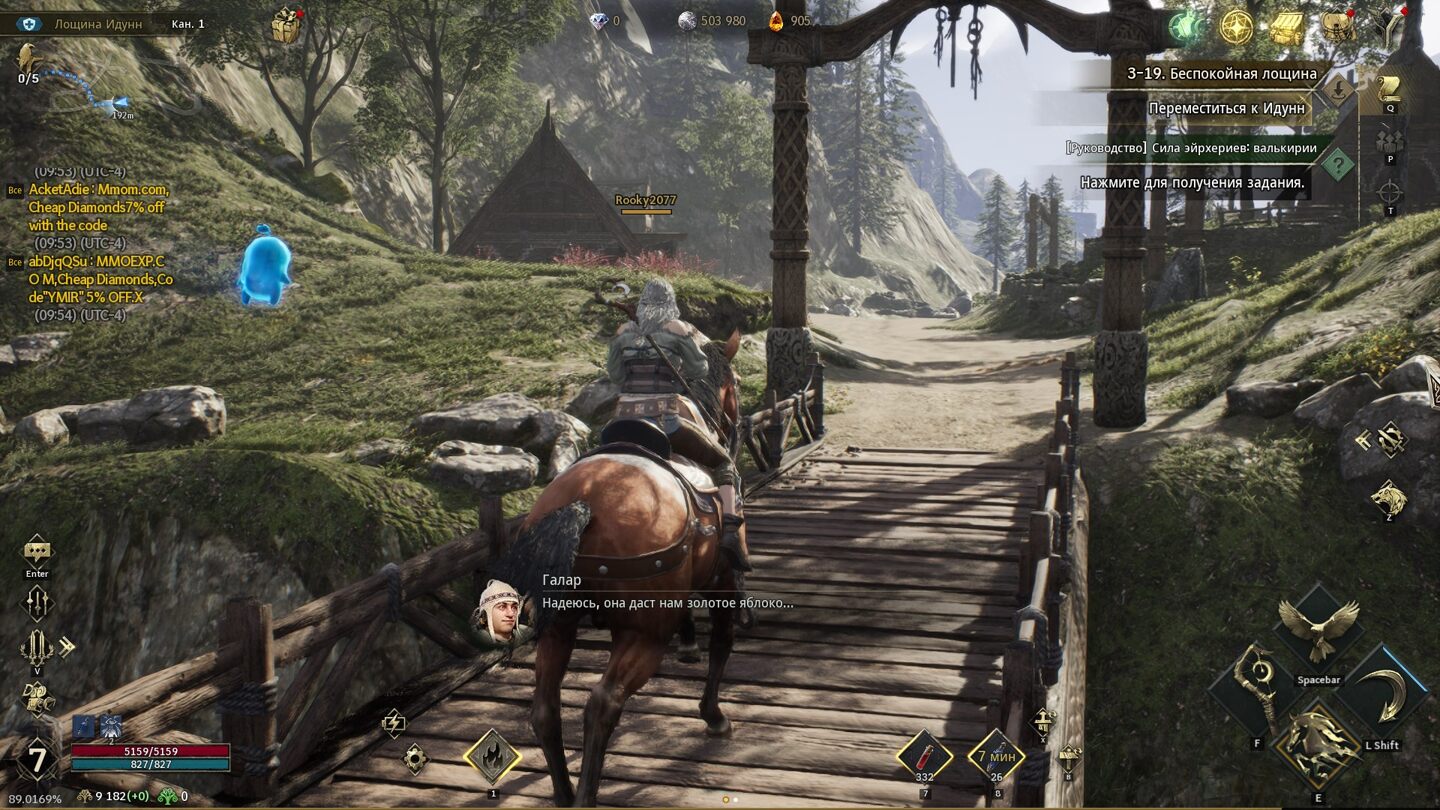
The universe of Ymir is beautifully drawn, but there's not much to explore in it. Therefore, it's best to get from point A to point B as quickly as possible — here, a companion or mount will help. Initially, a horse is available, but later you'll also get to ride a wolf, in addition to decorating its harness and armor. Short stops on the way should only be made if required by a quest or curiosity — for example, when you want to gawk at a petrified jötunn in the sunset or a noisy waterfall among the rocks. Everything else is done for the hero by the algorithm. However, sometimes you still need to act independently — you decide whether to accept or decline a quest from the bulletin board, and you also search for items without the program's help if the quest requires it.
The combat system is structured similarly. Formally, there's a wide range of options for fine finger work: there are four main techniques and up to 12 additional ones, an ultimate attack, weapon switching, consumable item slots, summoning a helper — and all of this will come in handy one way or another. In addition, the camera control isn't like in the usual action RPGs like God of War. You're allowed to change the camera position, but it doesn't automatically stick to a point behind the character or blindly follow the mouse cursor. This is done intentionally so that even in the heat of battle, you can freely select the desired interface element. However, you don't have to do all this manually either: just press the Latin X on the keyboard — and your hero will start fighting the enemies on their own, using the full range of available skills.
The combat system is structured similarly. Formally, there's a wide range of options for fine finger work: there are four main techniques and up to 12 additional ones, an ultimate attack, weapon switching, consumable item slots, summoning a helper — and all of this will come in handy one way or another. In addition, the camera control isn't like in the usual action RPGs like God of War. You're allowed to change the camera position, but it doesn't automatically stick to a point behind the character or blindly follow the mouse cursor. This is done intentionally so that even in the heat of battle, you can freely select the desired interface element. However, you don't have to do all this manually either: just press the Latin X on the keyboard — and your hero will start fighting the enemies on their own, using the full range of available skills.
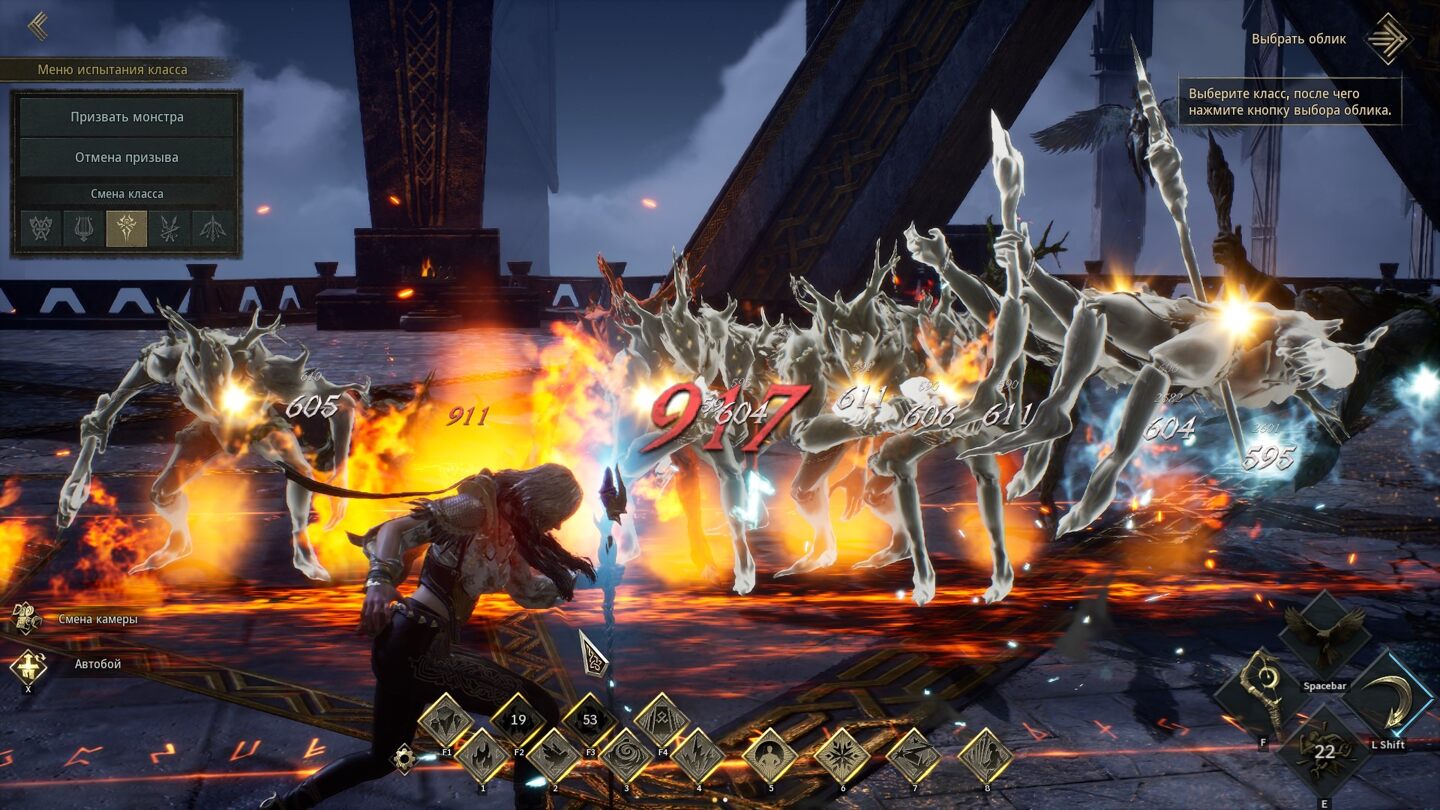
To stop auto-combat, just press X again, but keep in mind that abruptly stopping the hero's actions doesn't cancel enemy attacks — the wounded will continue to beat you until you finish them off or retreat to a safe place. But without movement, there's no progress, and without victories over opponents — no rewards. Everything that contributes to the einherjar's development, from resources and experience to clothing, can be looted from defeated monsters. And if three-quarters of the time spent in Legend of YMIR, heroes fight all sorts of evil and rush around the back alleys of Asgard, then one quarter must be devoted to leveling up, «sharpening» items, unlocking enhancements, learning combat techniques, improving appearance, and other joys familiar to anyone who has ever spent an evening with an Asian MMORPG.
The role-playing system here is quite developed — the number of statistics related to the hero can number in the dozens. One enhancement, for example, will allow you to collect ore or other resources faster, another will slightly improve defense, a third will slightly increase the chance of creating a rare item, and so on. In addition, there are class characteristics — such as magical attack power and magical damage for the Völva. At the same time, all fighters have two main indicators — equipment power, which allows you to assess your chances against monsters, and the character's power in PvP battles. All of this can be developed through leveling up (for experience points), unlocking combat techniques in the skill tree, and using various items. The system seems familiar, but this is still a game with gacha mechanics.
The role-playing system here is quite developed — the number of statistics related to the hero can number in the dozens. One enhancement, for example, will allow you to collect ore or other resources faster, another will slightly improve defense, a third will slightly increase the chance of creating a rare item, and so on. In addition, there are class characteristics — such as magical attack power and magical damage for the Völva. At the same time, all fighters have two main indicators — equipment power, which allows you to assess your chances against monsters, and the character's power in PvP battles. All of this can be developed through leveling up (for experience points), unlocking combat techniques in the skill tree, and using various items. The system seems familiar, but this is still a game with gacha mechanics.
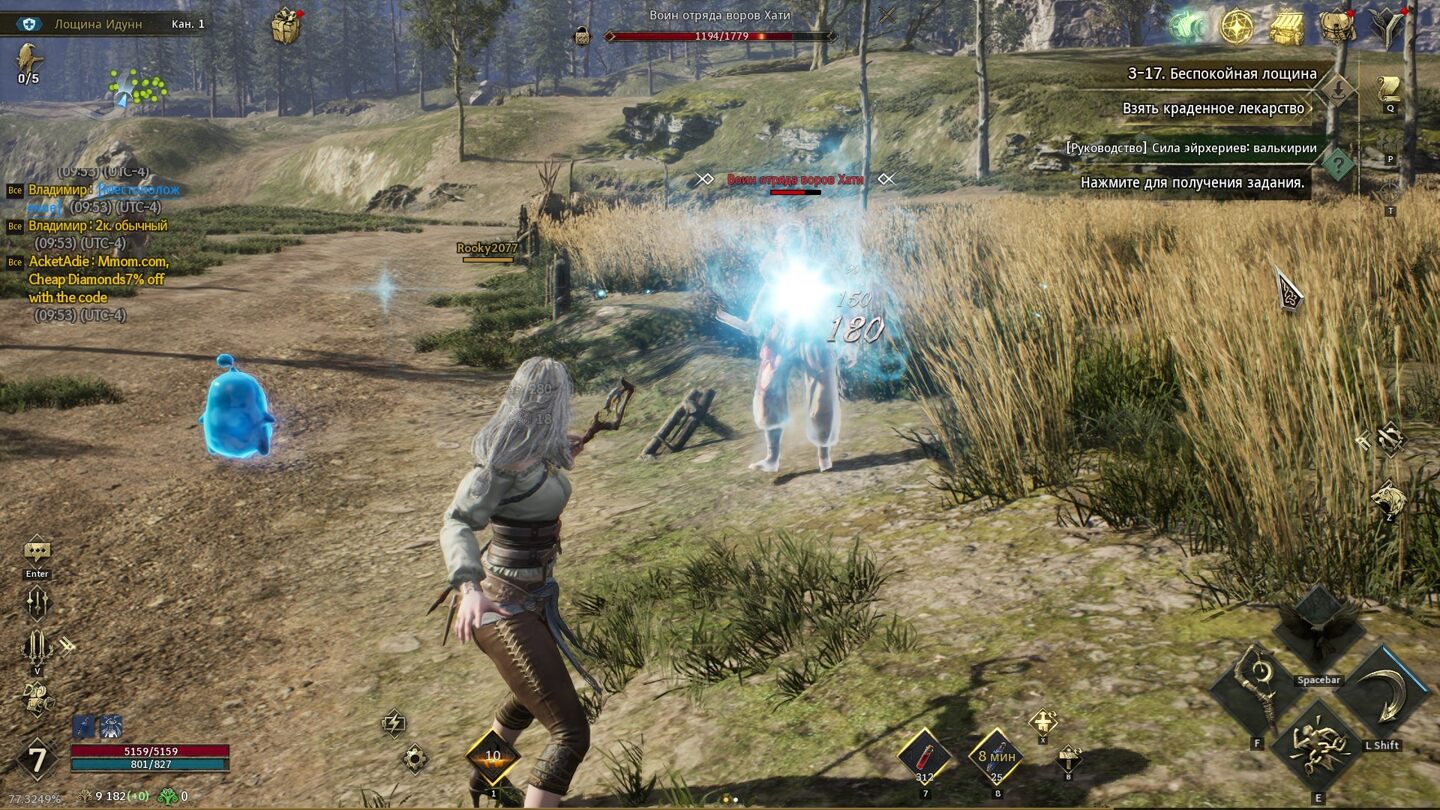
Here, for real money or virtual currency, you can unlock special character forms that have not only a bright appearance but also enhanced parameters. But you can't order the exact hero you want — as in any other gacha, everything is decided by chance. If you're unlucky this time, you'll definitely be lucky next time. The same applies to the crafting system — you have a certain chance to get the best effect when «sharpening» equipment items, but it's never 100%. It's for this approach that Wemade's creativity is criticized. The company, in turn, time and again guarantees the stability of the game economy, protecting it from collapse through blockchain technology.
We also shouldn't forget about each hero's entourage — it also needs to be leveled up. And we're not just talking about mounts. On the journey, you're also accompanied by a companion called a dís. There are a huge number of such dísir in the game, and each adds something to skills or role characteristics. For example, the Völva's first companion, obtained through the story, is Kúll. He helps restore mana points, strengthens defense, and increases the chance of dodging attacks. Finally, there are birds that allow einherjar to overcome obstacles and climb heights. If you press the jump button once, the hero will simply jump, and if you press it twice — they'll take flight, carried by the raven's talons. And all these creatures also need to be leveled up, and unlocking them is also subject to gacha mechanics. However, there are many guides online that tell you how to level up without spending money — if you want, they're not hard to find.
We also shouldn't forget about each hero's entourage — it also needs to be leveled up. And we're not just talking about mounts. On the journey, you're also accompanied by a companion called a dís. There are a huge number of such dísir in the game, and each adds something to skills or role characteristics. For example, the Völva's first companion, obtained through the story, is Kúll. He helps restore mana points, strengthens defense, and increases the chance of dodging attacks. Finally, there are birds that allow einherjar to overcome obstacles and climb heights. If you press the jump button once, the hero will simply jump, and if you press it twice — they'll take flight, carried by the raven's talons. And all these creatures also need to be leveled up, and unlocking them is also subject to gacha mechanics. However, there are many guides online that tell you how to level up without spending money — if you want, they're not hard to find.
How is Multiplayer Structured?
The game takes a long time to warm up, giving heroes the opportunity, so to speak, to stew in their own juices and doesn't pit them against each other until they reach high levels. There's really a lot of PvE content here, but it serves only one purpose — preparation for real challenges. Globally, the Legend of YMIR map is divided into three types of zones: in «blue» ones, PvP battles are prohibited; «gray» ones allow you to attack someone, but then be prepared to receive a Player Killer mark; and in «red» ones, the most dangerous, there's complete freedom. «Red» locations are disputed territories over which clans compete, so the war here only subsides during major patches and server maintenance.
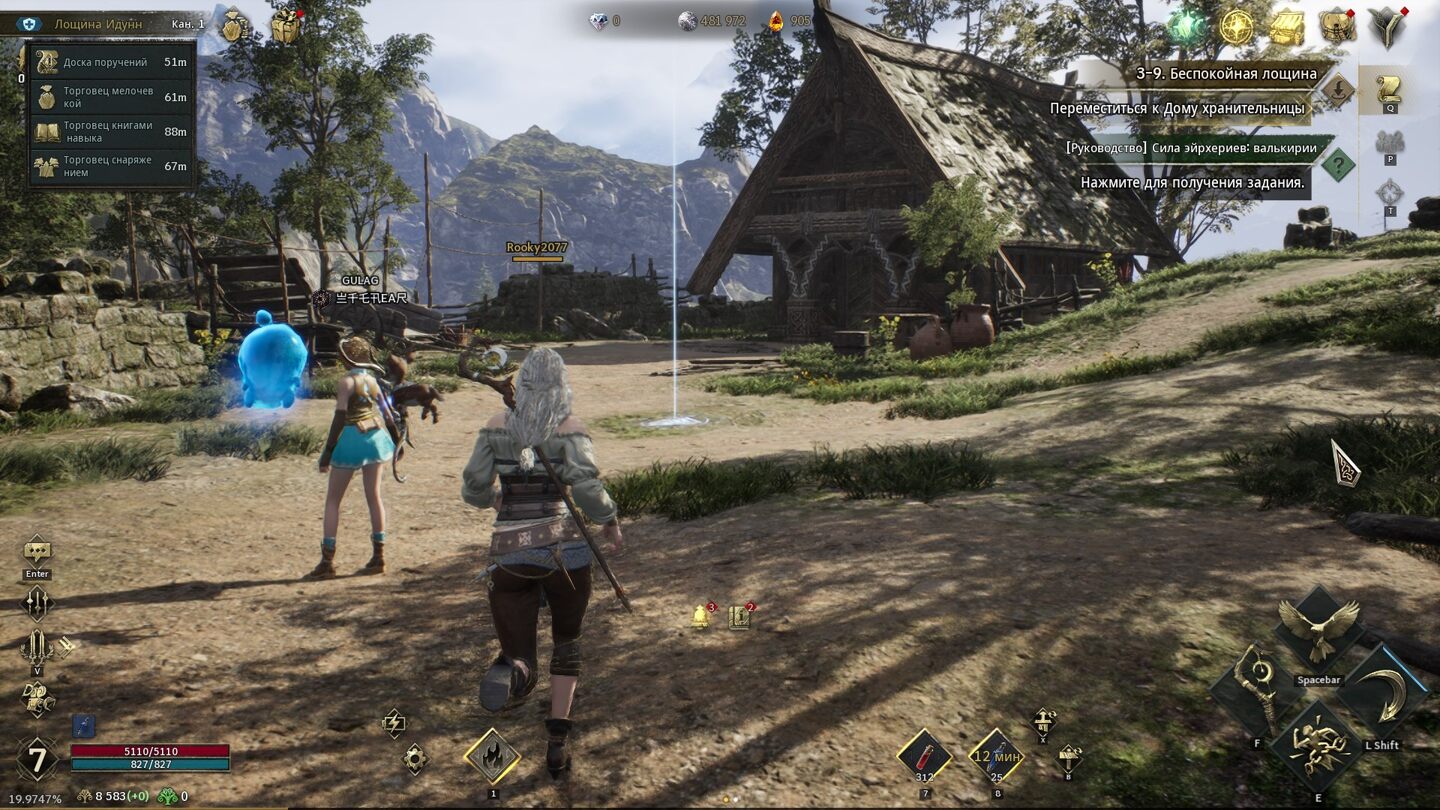
You'll start meeting heroes controlled by other gamers from the early levels, when all your attention is occupied by completing story quests and leveling up on monsters. After all, other players also need to complete similar tasks — especially many people gather at spots where monsters are found and where everyone farms experience points for the next level-up. Crowds can be useful when you need to defeat a boss — it's always easier to gang up on him than to act alone. And for a raid on brutes like Surtr, you'll have to gather a squad. Users help each other not only in collecting XP but also in unlocking everything that would otherwise have to be pulled from gacha or obtained through long farming. For example, quests for bosses from the «Black Valkyrie» list will give you both prizes and serious buffs.
Other multiplayer activities include expeditions — dungeons for group battles of several people, limited to certain levels. Participation in clans also gives bonuses — the more actively you invest in your group's influence strength, the more you get in return. This applies not only to resources but also to the development of role characteristics. You can spend ordinary silver — the cheapest currency in the game — on supporting the «club.» Clans are free to form alliances and fight for control of disputed lands.
Other multiplayer activities include expeditions — dungeons for group battles of several people, limited to certain levels. Participation in clans also gives bonuses — the more actively you invest in your group's influence strength, the more you get in return. This applies not only to resources but also to the development of role characteristics. You can spend ordinary silver — the cheapest currency in the game — on supporting the «club.» Clans are free to form alliances and fight for control of disputed lands.
Conclusion
Legend of YMIR is a beautiful MMORPG with an emphasis on PvE content, whose gameplay resembles Korean projects like Lineage 2M and MIR4. It will surely appeal to genre fans and those who want to have fun in an online game based on Norse mythology, but who don't mind game economics with gacha elements and blockchain, and who are also okay with simplifications like auto-combat. In any case, the game is free — you just need to download it to your computer or smartphone, and then register an account in a couple of clicks. So nothing prevents you from trying your hand at defending Asgard from monsters.
Zarium. March 2026
Zarium. March 2026