






Dune: Awakening Game Review
Dune: Awakening was one of the most anticipated MMOs of the year, and upon release, it received mixed reviews. Nevertheless, it has undoubtedly become a massive, multiplayer, and highly popular game — selling nearly 800,000 copies in its first week and peaking at almost 190,000 concurrent players. Let's explore the game's strengths and areas where the developers still have work to do.
About the Story and Atmosphere
Recall that the game is based on Frank Herbert's iconic sci-fi novel «Dune», which tells the story of various factions vying for control over the desert planet Arrakis — the sole source of the extremely valuable resource known as «spice». This narcotic extends life, expands consciousness, and grants the gift of foresight, which, among other things, is crucial for complex space navigation. The novel's protagonist, Paul Atreides, as the leader of House Atreides opposing the powerful Empire, used spice to predict events and mentally traverse multiple realities, accounting for various choices and their consequences.
In Dune: Awakening, an alternate history unfolds, seemingly born in Paul's mind. Here, he does not exist; his mother, Lady Jessica, gave birth to a daughter, and his father, Duke Leto, survived the attack on Arrakis and engaged in a brutal conflict with House Harkonnen for control over the planet and the precious spice. The player takes on the role of a prisoner sent to Arrakis to uncover the mystery of the disappearing Fremen — the local desert-dwelling natives.
In Dune: Awakening, an alternate history unfolds, seemingly born in Paul's mind. Here, he does not exist; his mother, Lady Jessica, gave birth to a daughter, and his father, Duke Leto, survived the attack on Arrakis and engaged in a brutal conflict with House Harkonnen for control over the planet and the precious spice. The player takes on the role of a prisoner sent to Arrakis to uncover the mystery of the disappearing Fremen — the local desert-dwelling natives.
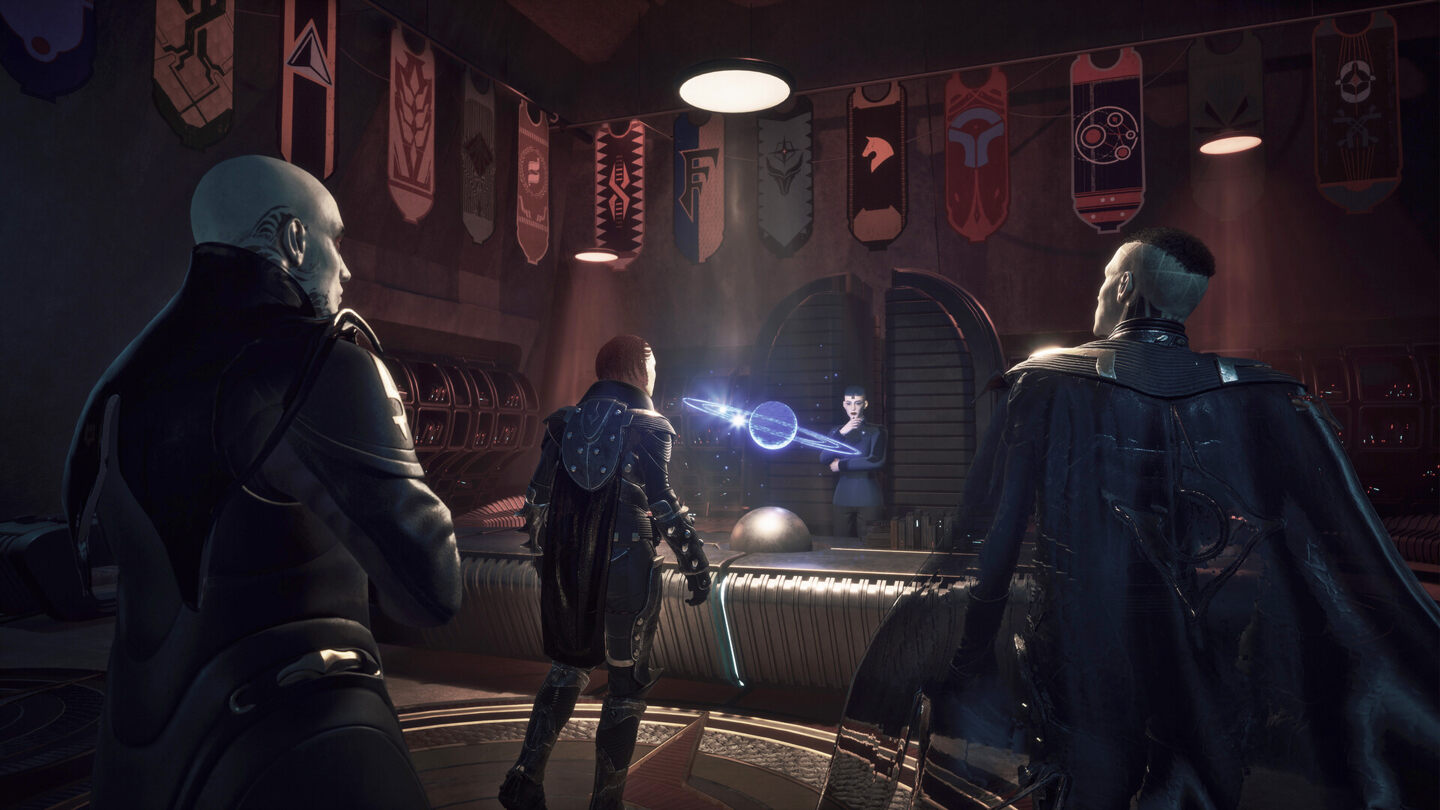
The game's story revolves around tracking the traces of this mysterious tribe, during which we discover the true power of the desert and progress from a nameless survivor to an influential representative of House Atreides or Harkonnen. Along the way, players must complete numerous main and side quests, absorb vast amounts of lore through reading or listening, watch spectacular cutscenes, breathe in the sand, and fully immerse themselves in the brilliantly recreated atmosphere of the iconic universe.
Massive sandstorms occur regularly, and our primary enemies are the infamous Shai-Hulud, the sandworms that react to vibrations from movement. Additionally, the game is full of references to the original novel — from the use of Holtzman shields in combat (which are incredibly difficult to penetrate) to encounters with familiar characters like Duke Leto. All of this is framed by stunning graphics and magnificent location designs that also change under the influence of storms.
Massive sandstorms occur regularly, and our primary enemies are the infamous Shai-Hulud, the sandworms that react to vibrations from movement. Additionally, the game is full of references to the original novel — from the use of Holtzman shields in combat (which are incredibly difficult to penetrate) to encounters with familiar characters like Duke Leto. All of this is framed by stunning graphics and magnificent location designs that also change under the influence of storms.

About the Gameplay
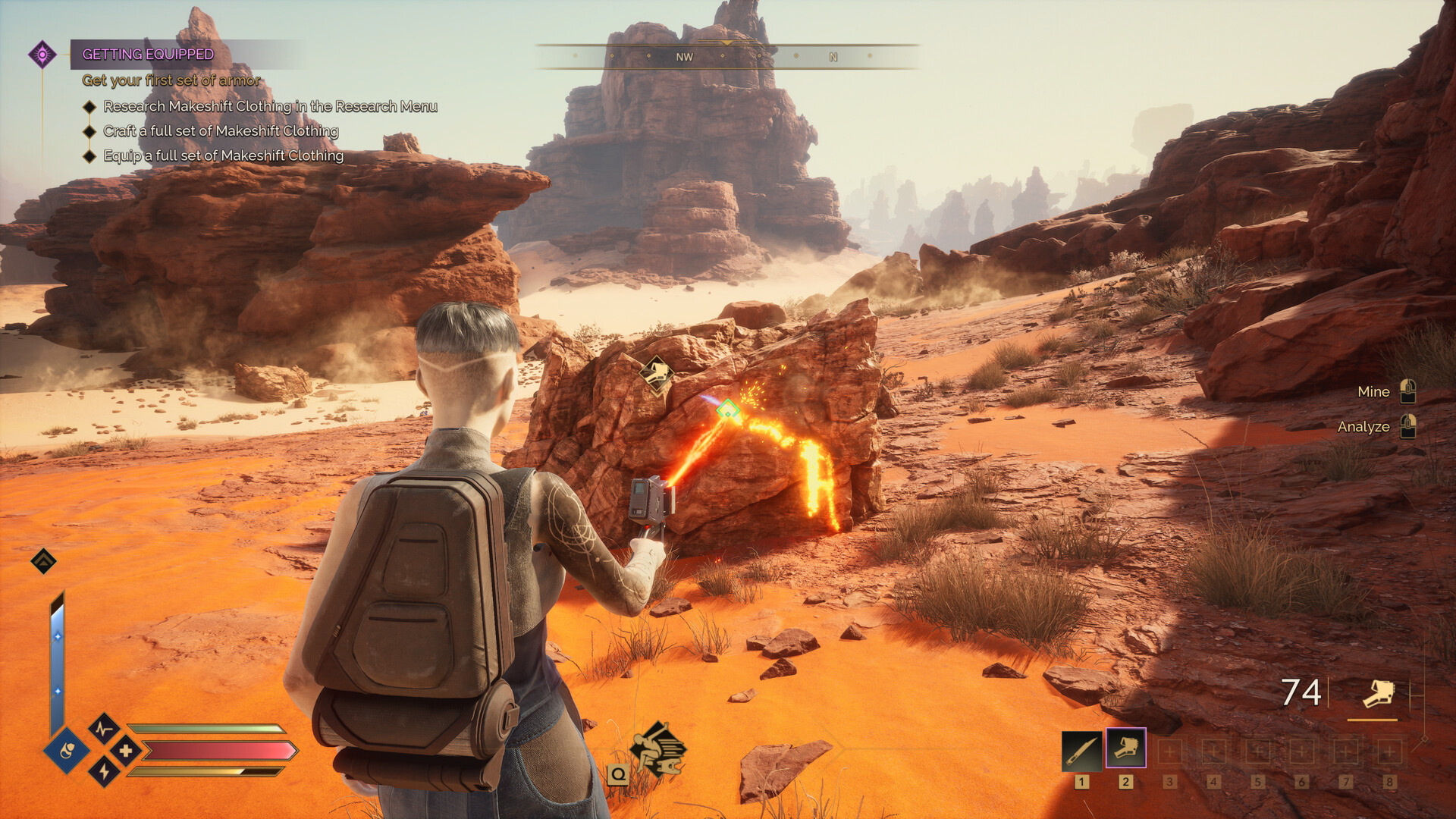
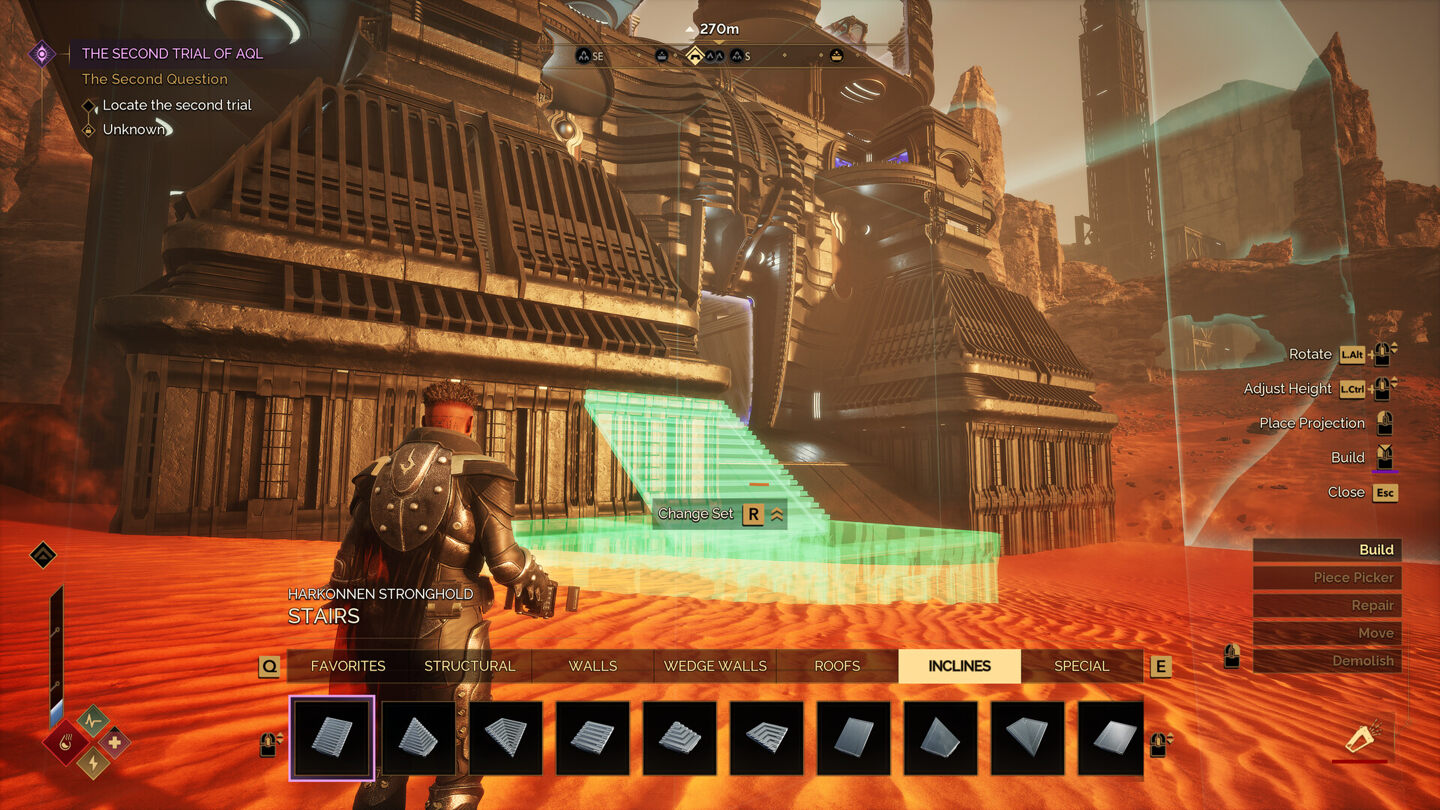
It's no surprise that surviving the wastes of Arrakis is no easy task. Aside from the giant worms, deadly heat and dehydration pose significant dangers. Thus, survival mechanics are central to the gameplay. Essentially, Dune: Awakening is a survival game with numerous MMO elements. We engage in all the typical activities of such games: constantly scavenge the map for resources, gather them, build bases and entire outposts, set up various defensive structures, power plants, workbenches, and material processing machines to craft everything possible. Many items require blueprints, and finding them is one of our most important tasks.
At the same time, we must constantly monitor the temperature — staying too long under the scorching sun can quickly send the player to their ancestors. Dehydration will kill you even faster. Therefore, in the early stages, before we build enough dew collectors and wind traps, water, not spice, is the most valuable resource — even to the point of collecting enemies' blood to extract water from it.
At the same time, we must constantly monitor the temperature — staying too long under the scorching sun can quickly send the player to their ancestors. Dehydration will kill you even faster. Therefore, in the early stages, before we build enough dew collectors and wind traps, water, not spice, is the most valuable resource — even to the point of collecting enemies' blood to extract water from it.
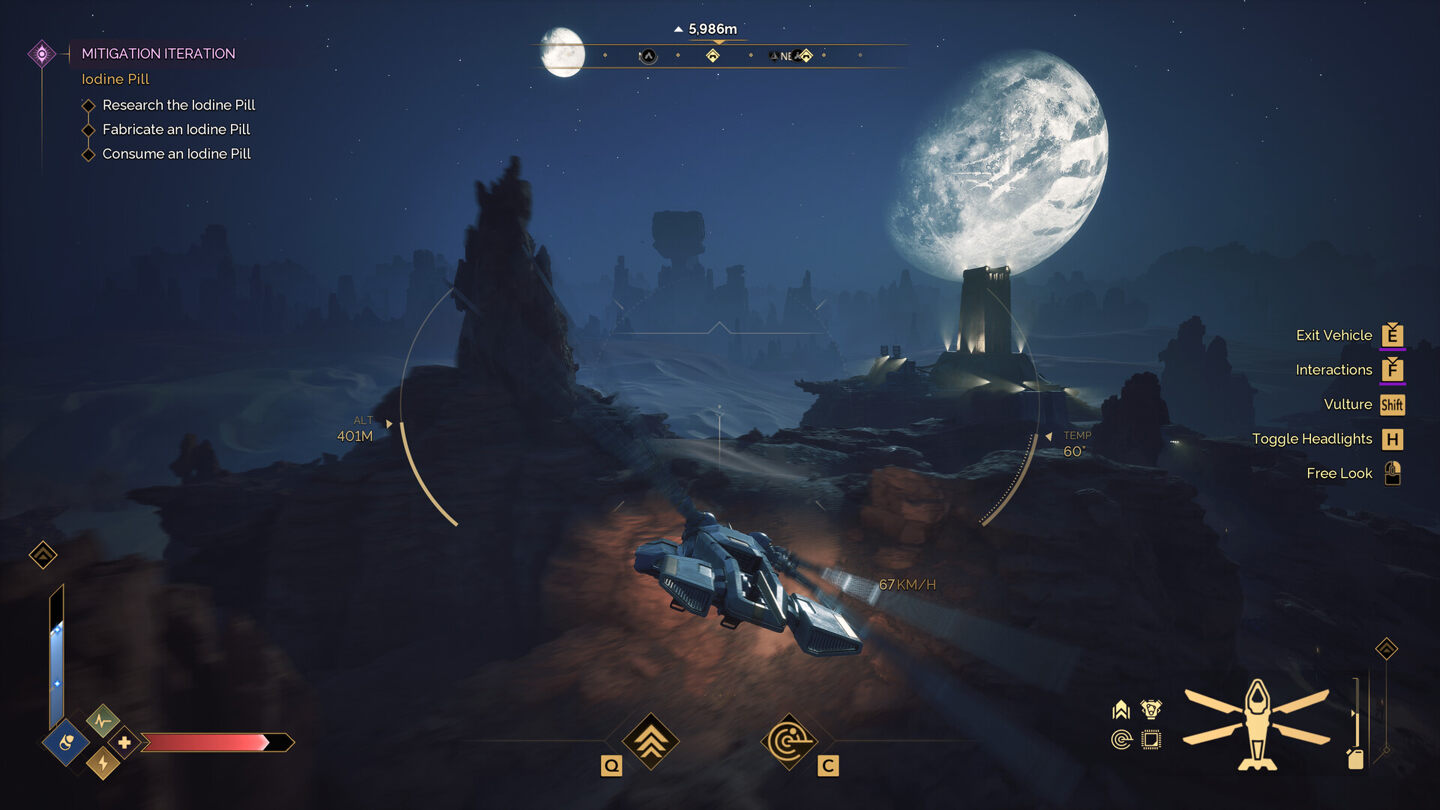
Finally, moving across the sand must be done with extreme caution while monitoring the vibration sensor — if a Shai-Hulud detects your movements and kills you, it's a real tragedy. While death in other cases only results in losing some resources and equipment, dying in the belly of a sandworm means losing absolutely everything you've worked so hard to acquire. Thus, the method of movement is crucial — it's best to move quickly, through the air, using a local grappling hook analog or vehicles.
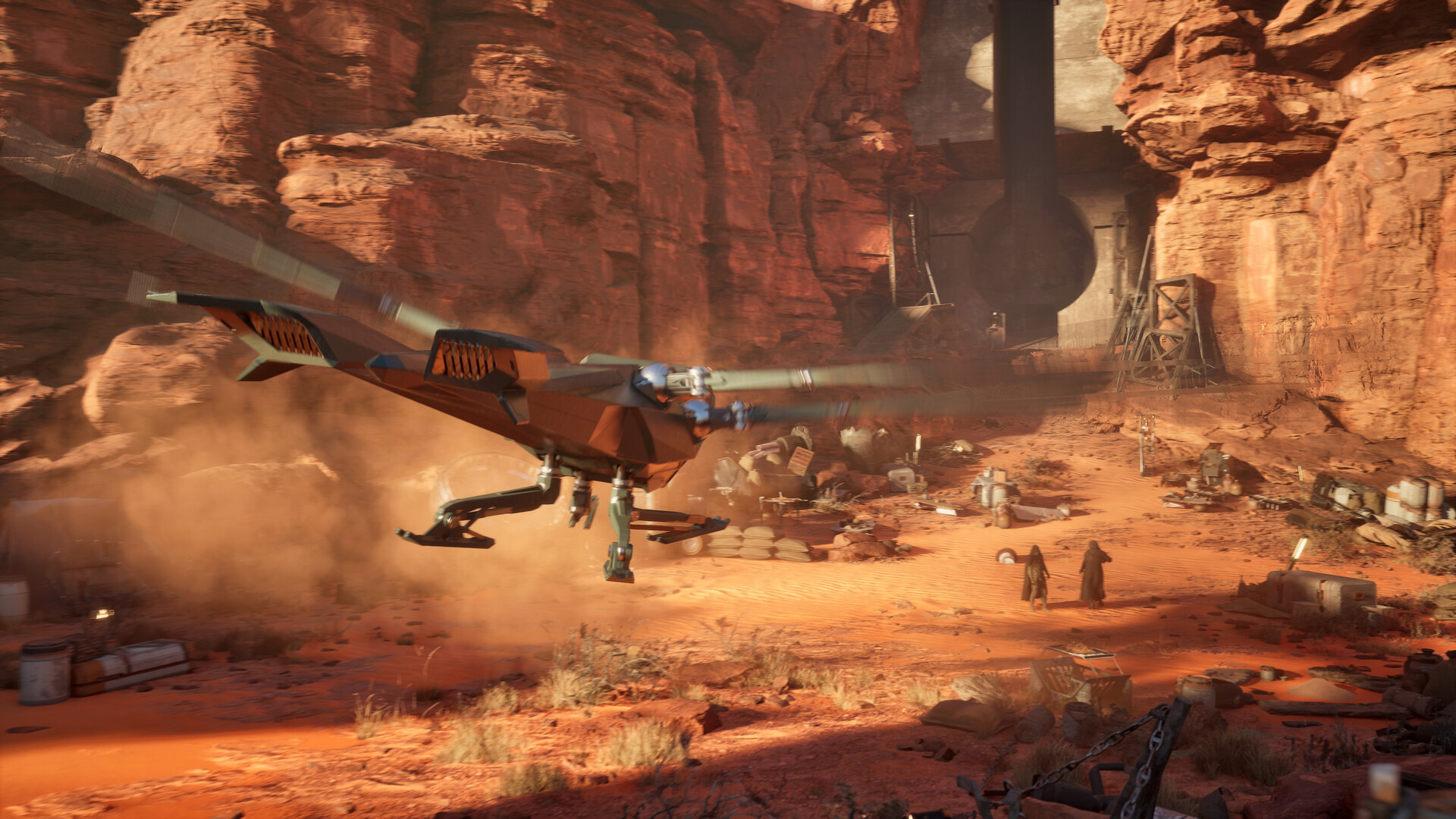
However, ground vehicles deteriorate from sand (requiring repair stations) and can get stuck, and you may also be detected by aerial patrols, which temporarily immobilize the player. Consequently, the air is the most comfortable place for us — for this, we use ornithopters, the local dragonfly-like helicopters.
However, ground vehicles deteriorate from sand (requiring repair stations) and can get stuck, and you may also be detected by aerial patrols, which temporarily immobilize the player. Consequently, the air is the most comfortable place for us — for this, we use ornithopters, the local dragonfly-like helicopters.
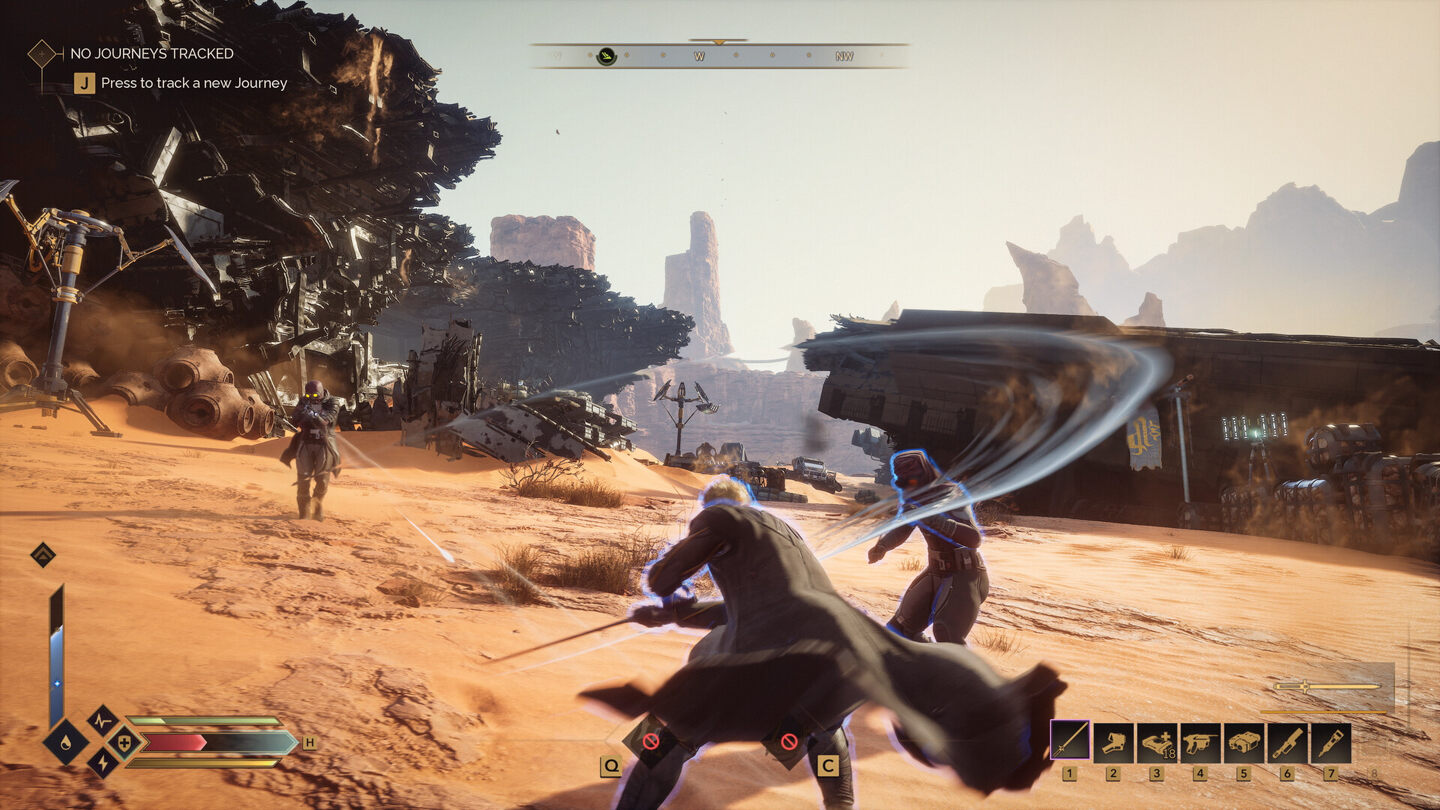
Beyond resource gathering and constant survival concerns, we engage in combat, acquire and upgrade equipment (including protective suits that reduce heat and dehydration damage), and level up our character. Dune: Awakening offers five classes — four base classes and one unlockable during gameplay. The Fencing Master specializes in melee combat, defense, and evasion; the Mentat focuses on ranged combat and turrets; the Bene Gesserit excels in magic and stunning; and the Soldier is a versatile class that shoots and defends well while also using the «Shigawire Claw» ability — a grappling hook analog.
The fifth class, unlockable during gameplay, is the Planetologist, specializing in exploration and resource gathering. However, your starting specialization doesn't limit your character's development — you can find teachers who will train you in other classes' abilities. Combat occurs in real-time as a third-person shooter, but vehicles can also be used in battles — with ornithopters proving especially effective.
The fifth class, unlockable during gameplay, is the Planetologist, specializing in exploration and resource gathering. However, your starting specialization doesn't limit your character's development — you can find teachers who will train you in other classes' abilities. Combat occurs in real-time as a third-person shooter, but vehicles can also be used in battles — with ornithopters proving especially effective.
About Game Modes
Like most modern MMOs, Dune: Awakening combines PvE and PvP activities. We complete numerous quests, explore the world of Arrakis, discover long-forgotten settlements, ancient ruins, and hidden caches, clear outposts and bandit camps, and run instances and dungeons with other players — often requiring not just combat but puzzle-solving as well.
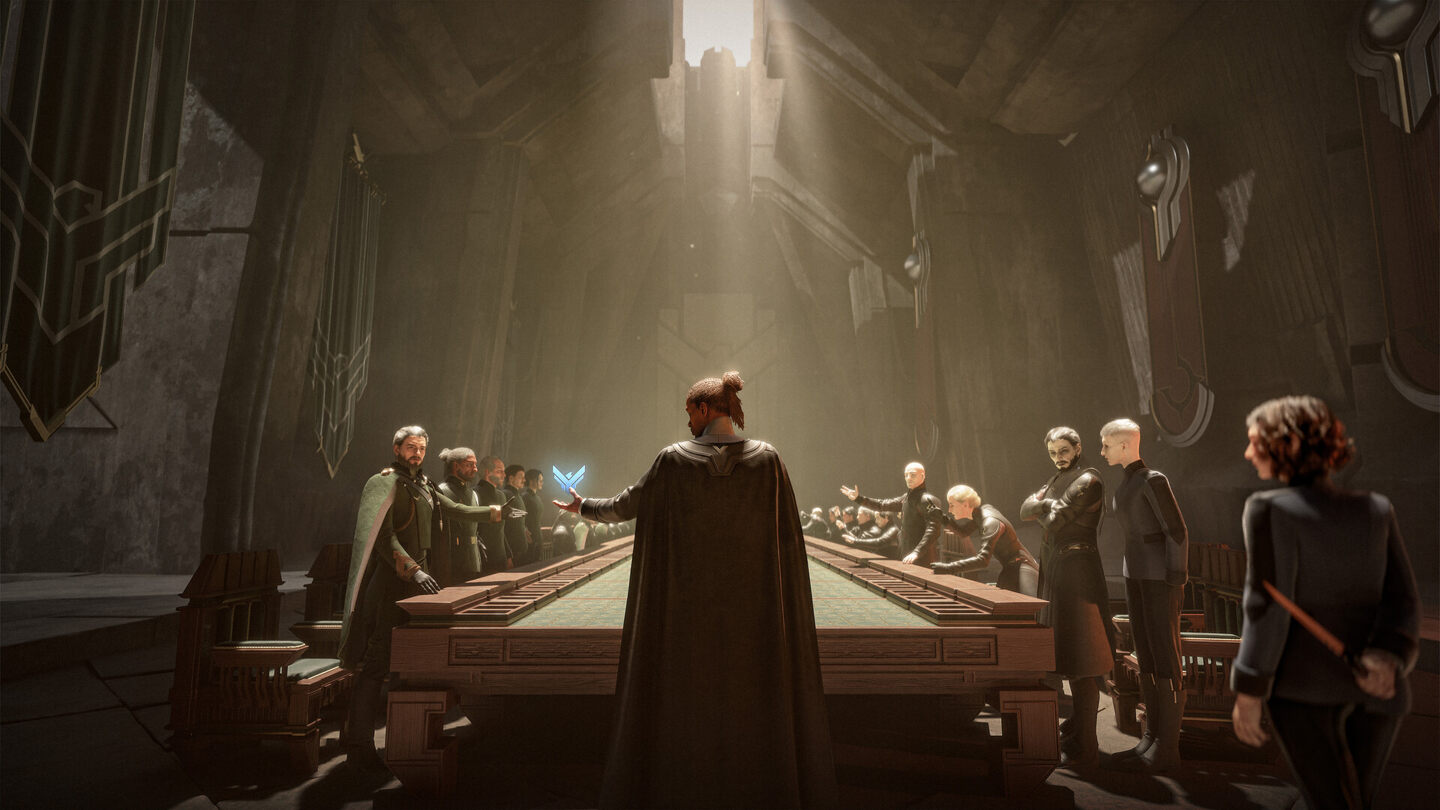
Additionally, once players join one of the Great Houses through the story, a mechanic called «Landsraad Voting» unlocks — factions commission guilds to deliver resources or eliminate various targets. Those who accumulate the required points fastest can vote, pass important laws, and strengthen their faction's position.
Additionally, once players join one of the Great Houses through the story, a mechanic called «Landsraad Voting» unlocks — factions commission guilds to deliver resources or eliminate various targets. Those who accumulate the required points fastest can vote, pass important laws, and strengthen their faction's position.
But guilds' primary activity is battling for territories, outposts, and resources — mainly spice, control over which provides many advantages, including taxation rights. This occurs within the «Right to Extract» system, which permits player battles and full looting of all acquired goods in certain zones. Furthermore, in the late game, a vast open and seamless location called the «Deep Desert» unlocks, where nearly full PvP reigns.
In other areas, player combat is restricted — including by faction reputation, which drops for attacking players outside designated zones, potentially limiting access to traders, quests, and locations (while increasing reputation unlocks more opportunities). At launch, the «Deep Desert» initially had only a small PvE enclave — the rest of the massive location was dedicated to battles between players and guilds, with almost no rules.
In other areas, player combat is restricted — including by faction reputation, which drops for attacking players outside designated zones, potentially limiting access to traders, quests, and locations (while increasing reputation unlocks more opportunities). At launch, the «Deep Desert» initially had only a small PvE enclave — the rest of the massive location was dedicated to battles between players and guilds, with almost no rules.
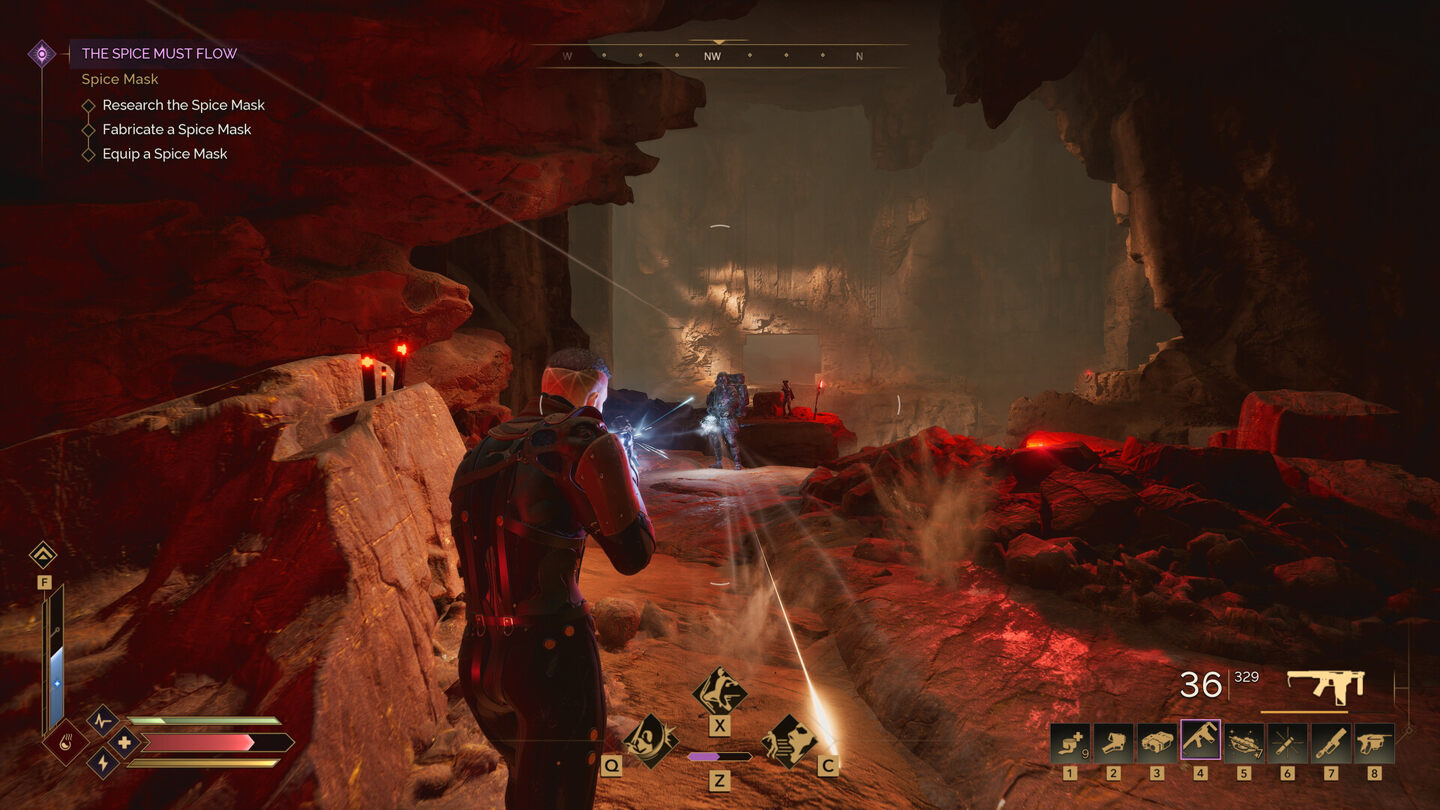
And it's the PvP mechanics that have drawn the most criticism. Peaceful players complained about the lack of safe zones in the «Deep Desert», while PvP-focused gamers were unhappy with the balance, which heavily favors ornithopters — they can practically shoot ground targets with impunity. Many also feel that «Landsraad Voting» offers no chance for small groups, as large guilds quickly seize dominance, halting the event.
The developers responded swiftly — for instance, by expanding PvE zones in the «Deep Desert» and nerfing aerial vehicles. While this hasn't solved all the problems (peaceful players still face frequent and senseless attacks, being forced to land ornithopters only to have sandworms unleashed on them), it's good that the developers are addressing issues. Many in the community are now proposing ways to improve the game, and there's hope they'll be heard.
The developers responded swiftly — for instance, by expanding PvE zones in the «Deep Desert» and nerfing aerial vehicles. While this hasn't solved all the problems (peaceful players still face frequent and senseless attacks, being forced to land ornithopters only to have sandworms unleashed on them), it's good that the developers are addressing issues. Many in the community are now proposing ways to improve the game, and there's hope they'll be heard.

Conclusion
In any case, despite some issues common to many MMOs early in their development, it's clear that Dune: Awakening is a big, important, and highly engaging MMO, unique in its genre and the most epic game based on Frank Herbert's iconic novel. It masterfully captures the universe's atmosphere, offering a cinematic story, harsh yet compelling survival mechanics, territorial wars, and much more. If you dislike PvP, you might want to wait for the developers to balance PvE and PvP, but Dune: Awakening is definitely worth trying afterward.
Zarium. September 2025
Zarium. September 2025